Publications
Browse PeaceRep publications by region in the tabs below, or search our publications by keyword, phrase, author or country. You can also browse our key findings pages, which link to the relevant publications by topic.
This is a supplementary page that is not intended to replace our main publications database. Users should access PeaceRep publications on this page only if they are not able to view our database due to browser constraints.
Global

Time to Make a Change: Summary and Reflections on the PeaceRep Final Conference
This report offers summaries and reflections on PeaceRep's final conference, Time to Make a Change: Reimagining Peace Processes in a Fragmented World.

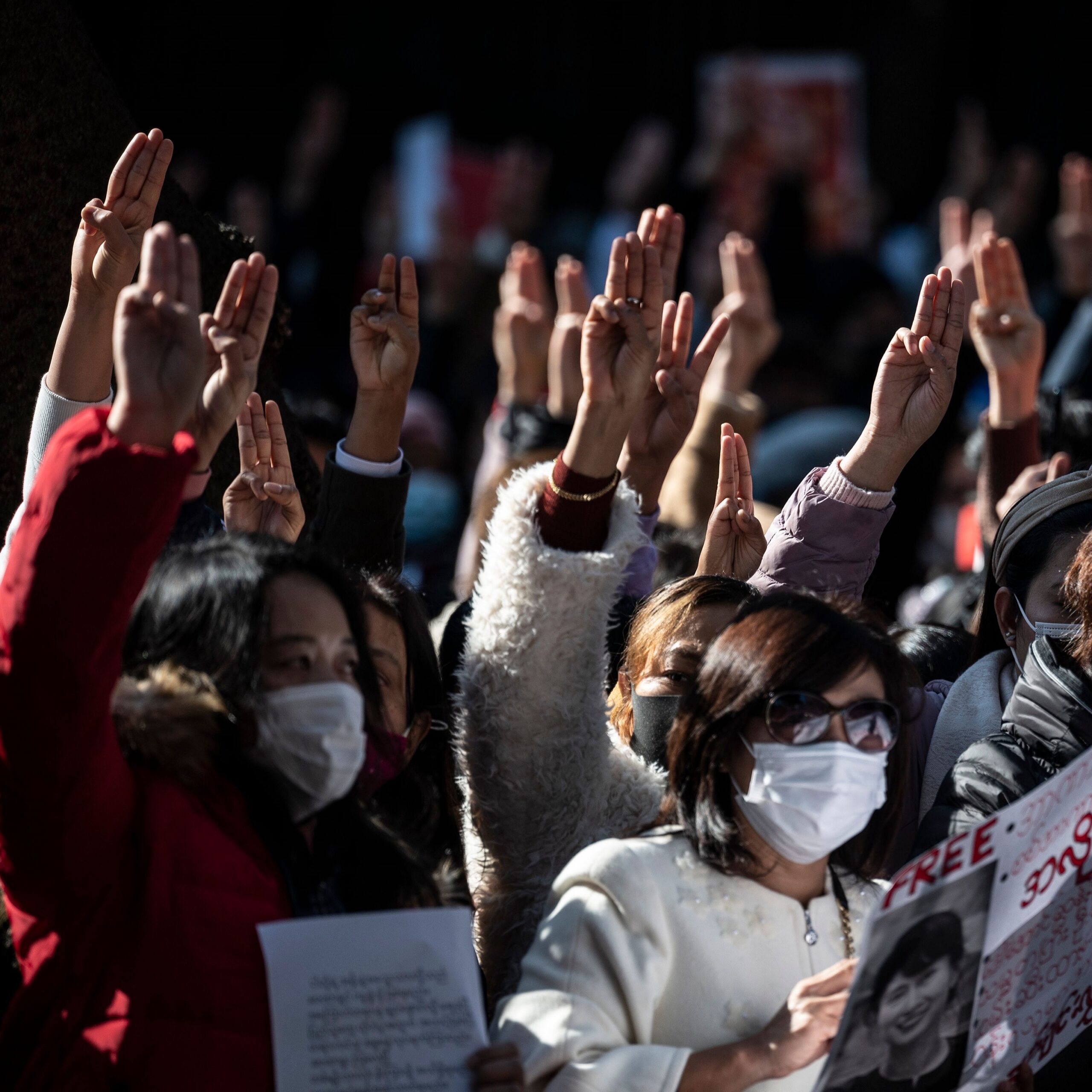
Myanmar’s Fragmented Future: Evolving Governance and Conflict Dynamics Five Years after...
This policy brief describes the evolution of stakeholders after the 2021 coup d’état in Myanmar, provides an overview of the different processes aimed at drafting a constitutional framework,, and...
Beyond the Deal? Rethinking Statebuilding Amid Conflict Fragmentation and Transactional...
This brief reflects on the role of statebuilding in conflict-affected settings, addressing the reasons for which it is largely absent from current international peace negotiations.

From War Economies to Predatory Peace: How Peace Settlements Legitimise Extraction
This brief identifies a recurrent pattern in post-conflict governance in which peace settlements reorganise wartime systems of extraction rather than dismantling them.

Revised Role for the UN in Afghanistan: Pragmatic Presence Today; Preparing for...
This policy brief argues that the UN should renew its political mission in Afghanistan in March 2026 – but with a revised role to avoid unattainable goals of reforming...

Now or never? Political Conditions for Credible Elections in South Sudan
This report explores the conditions under which elections scheduled for December 2026 could meaningfully contribute to stability, inclusion, and South Sudan’s broader political transition.
Middle East & North Africa

How local are local agreements? Shaping local agreements as a new form of third-party...
Based on two case studies from Syria, this article argues that unilateral external intervention in protracted conflicts is not only about military and financial support to one or other...

Resolving Water Conflicts: Dispute Settlement Mechanisms Applicable to International...
This report sets out the international legal framework for conflict avoidance or resolution, with a focus on mechanisms available to states with transboundary water disputes.

Rethinking Governance: Insights from Syria during Covid-19
This report highlights the main impacts of Covid-19 on the education and economy sectors, and suggests general recommendations relevant to the international community, humanitarian workers, and governmental institutions.

Qatar and UAE in Peacemaking and Peacebuilding
This report highlights ways in which Qatari and Emirati peacemaking/ peacebuilding engagement is qualitatively different from other states’ or international organisations’ efforts in this sphere.

MENA Regional Organisations in Peacemaking and Peacebuilding
This report highlights primary assets and challenges of three regional organisations in the MENA peacebuilding space: the League of Arab States, Gulf Cooperation Council and Organisation of Islamic Cooperation.

Peacebuilding in Turbulent Times: Turkey in MENA and Africa
This report assesses the Turkish leadership and policy community’s understanding of peacebuilding, the contexts and main motivations underlying its conceptualisation and implementation, while outlining potential future developments.

Pulling the Pieces Together: Health and community actors as levers of local response in...
This report examines the local responses to Covid-19 by health professionals and Civil Society Organisations (CSOs), demonstrating the deeply fragmented context of public authority in Yemen.

Non-Western approaches to peacemaking and peacebuilding
This paper provides an overview of how existing scholarship has addressed non-Western approaches to peacemaking and peacebuilding and outlines some possible future directions for research on the topic.

Fragmentation of Peacemaking in Syria: Reality and Perception
An "illiberal peace” is taking hold in Syria, with Russia, Turkey and Iran positioning themselves as mediators and overshadowing peace initiatives by Western powers.

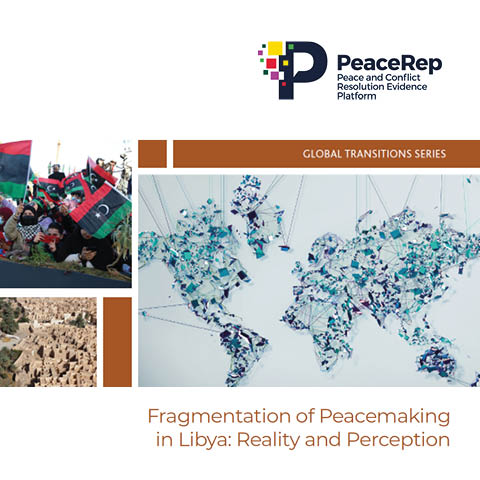
Fragmentation of Peacemaking in Libya: Reality and Perception
The latest political analysis, media reports, and original interviews with stakeholders demonstrate how local actors interpret the role and effect of non-Western actors involved in the Libyan crisis.

The Impact of Covid-19 on Women’s Inclusion in the Peace Process in Yemen
Yemeni women voice how Covid-19 affected them personally and professionally, highlighting restrictions on women’s broad participation resulting from the pandemic and how it has impacted their work on the...
Central & Southeast Asia

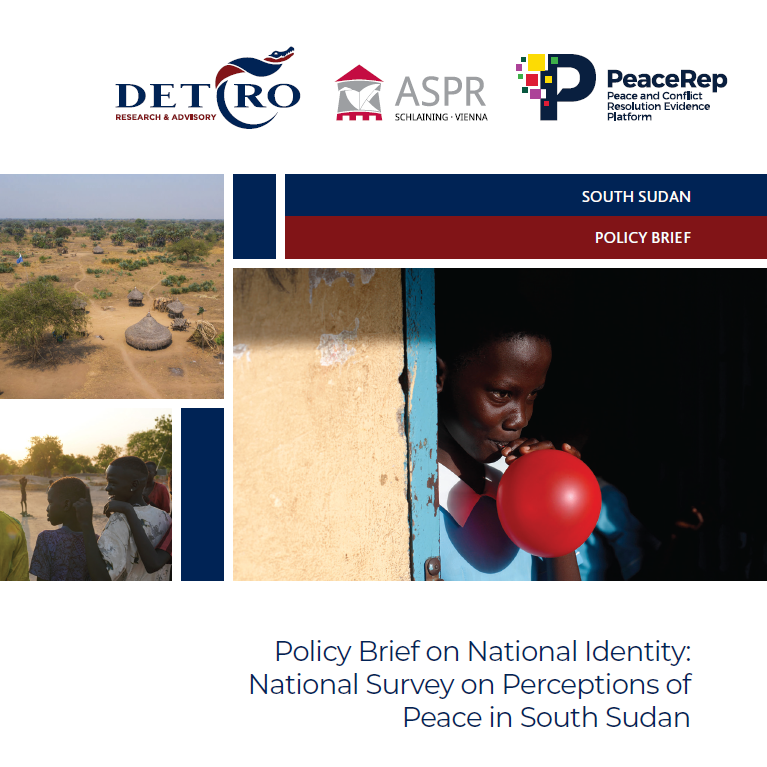
Elections: Perceptions of Peace in South Sudan
This policy brief presents a summary of findings about citizens’ perceptions of upcoming national elections, from a survey of South Sudanese respondents in 2021-2022.

Fragmentation of Peacemaking in South Sudan: Reality and Perception
In a complex and multi-stakeholder peacemaking environment, South Sudan has been a test case for international cooperation. National stakeholders are skeptical about the efficacy of peacemaking initiatives to date.

Promises and Perils of Regional Response to Covid-19 in Asia
‘Crises’ - financial crash, pandemics, political conflicts, and natural disasters - can provide stimulus for strengthening and development of regional organisations. This report maps and analyses Covid-19 responses from...

Implementing peace accords sustainably: Alternative avenues to bypass blockages and...
Implementation of peace accords often hit blockages and meets resistance, and are prone to delay, breakdown and collapse. Alternative avenues for implementation discussed in this report can help to...

China’s Engagement in Conflict and Post-Conflict Settings: The Quest for Stability
This report finds that China seeks stability rather than peace, unlike its Western counterparts, and China’s economic development drives engagement in conflict and post-conflict settings.

“Asian” Approaches to Peacebuilding?: Modalities, Convergences, and Differences in...
This report finds that, while a coherent “Asian model” of peacebuilding does not exist, there are common features which characterize the international conflict management practices of China, Japan, and...
Sub-Saharan Africa

Sudan’s Enduring Transition: Evolving Arrangements after the Fall of Bashir
This PA-X Spotlight report describes how the overthrow of Sudan's long-term military ruler Omar al-Bashir was triggered by a broad civil-society-based movement, supported by the Sudanese military in the...

Resolving Water Conflicts: Dispute Settlement Mechanisms Applicable to International...
This report sets out the international legal framework for conflict avoidance or resolution, with a focus on mechanisms available to states with transboundary water disputes.

Fragmented Transitions in the Context of Competitive Regionalism: The Case of Ethiopia
Exploring the new regional configuration of Ethiopia and the Wider Horn, and what can be learned from the region's dynamic structural setup for other transitional regional configurations.

Security Governance, Subsidiarity, and UN-AU Partnership in Somalia
This report uses Somalia as a case study to explore how non-Western regional organisations (ROs) engage in peacemaking and peacebuilding, how local actors respond to these interventions, and whether...

Fragmentation of Peacemaking in South Sudan: Reality and Perception
In a complex and multi-stakeholder peacemaking environment, South Sudan has been a test case for international cooperation. National stakeholders are skeptical about the efficacy of peacemaking initiatives to date.

Fragmented Transitions in the Context of Competitive Regionalism: The Case of Sudan
Exploring how the regional and international constellation around Sudan provides a difficult and non-conducive environment for the country's twin transition from both armed conflict and authoritarian rule.

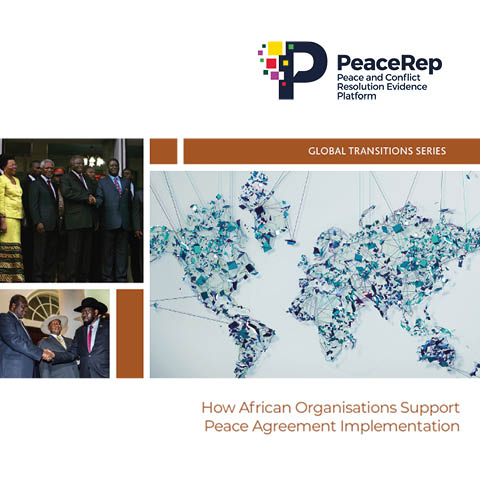
How African Organisations Support Peace Agreement Implementation
This report explores how African organisations support the implementation of framework agreements for transitions through continued mediation, guarantees and monitoring.

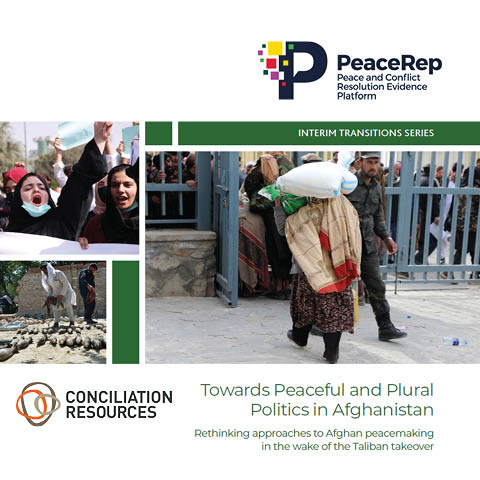
Towards Peaceful and Plural Politics in Afghanistan
Report on a consultation with veterans of pre-August 2021 reconciliation, with key findings to inform priority actions for charting paths towards peaceful, plural politics in Afghanistan.

Perceptions of Peace in South Sudan: Longitudinal Findings
South Sudanese citizens’ perceptions of peace are explored in the results of a 2021-2022 three-wave survey, illustrating the views of 8,843 people from 12 counties across 9 states and...

Public Authority: Perceptions of Peace in South Sudan
Headline findings about citizens’ perceptions of whom they trust to make decisions about their community, from a survey of South Sudanese respondents in 2021-2022.
Europe & Eastern Europe

Investigating the Russo-Ukrainian War: Evidence and Analysis from PeaceRep’s Ukraine...
This policy brief aims to draw together concluding research findings from the PeaceRep Ukraine programme.