Three new PeaceRep data reports reveal global trends in mediation and peacemaking practice in 2025.
Drawn from the latest releases of the PA-X Peace Agreements Database and the Mediation Event and Negotiators Database, the reports offer unique insights into the changing nature of peacemaking alongside recommendations for policy and practice.
Read the full reports:
Peace Agreements in 2025: Insights from the PA-X Database
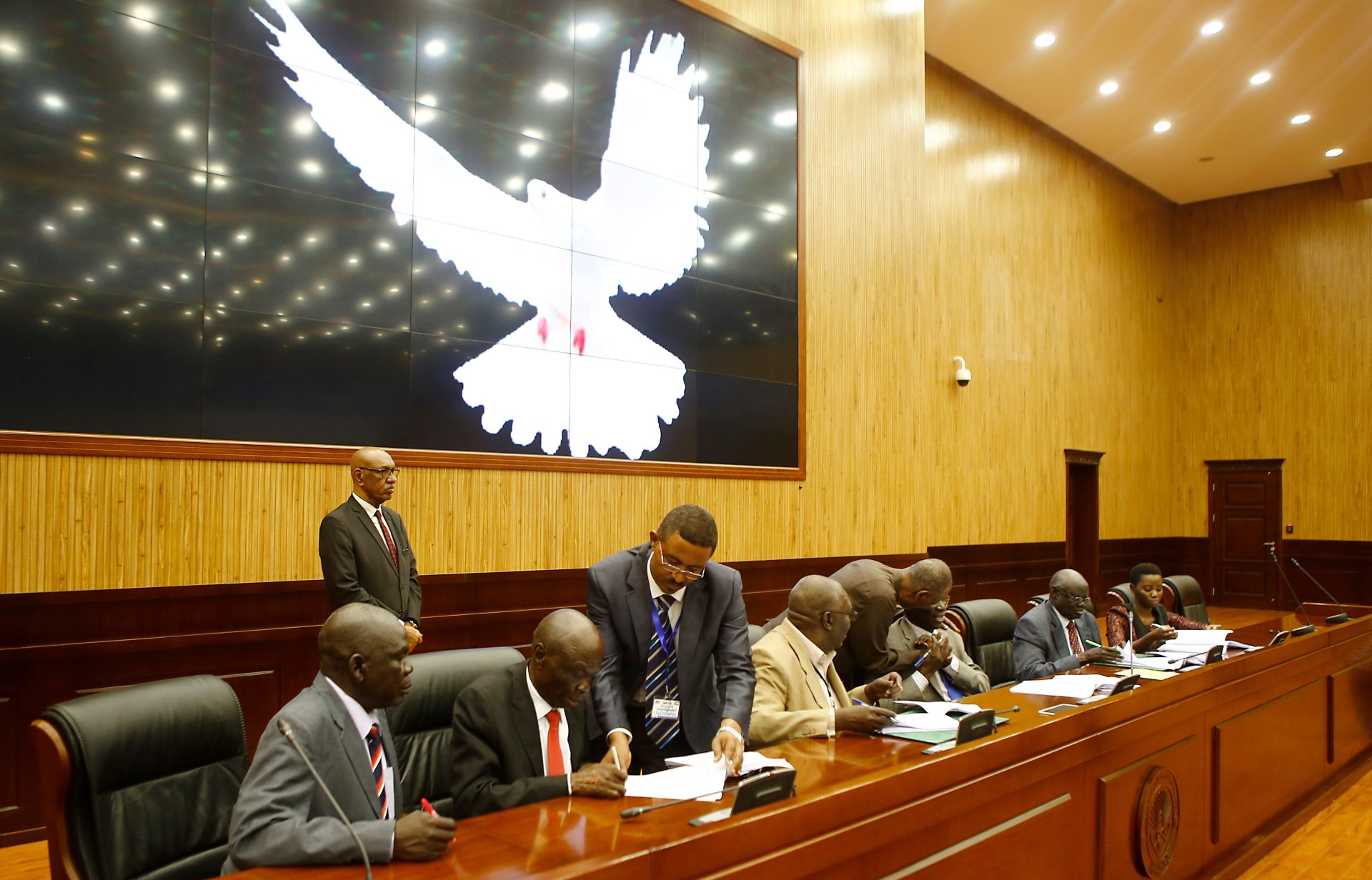
New data reports highlight the changing nature of peacemaking
PeaceRep has released three new data reports revealing global trends in mediation and peacemaking practice in 2025.
The reports offer a unique way for users to engage with the extensive data in the latest versions of the PA-X Peace Agreements Database and the Mediation Event and Negotiators Database (MEND) database, offering key global insights at a glance.
Two new policy briefs also present headline key findings from PA-X and MEND to support policy and practice.
Changing peacemaking practice: PA-X findings
In 2025, PA-X researchers recorded 63 new formal and written peace agreements in Version 10 of the PA-X Peace Agreements Database. The new PA-X data report explores global insights into peace agreements signed in 2025, their characteristics, analysis of the agreement contents and key topics, as well as data on gender provisions in peace agreements and local agreements.
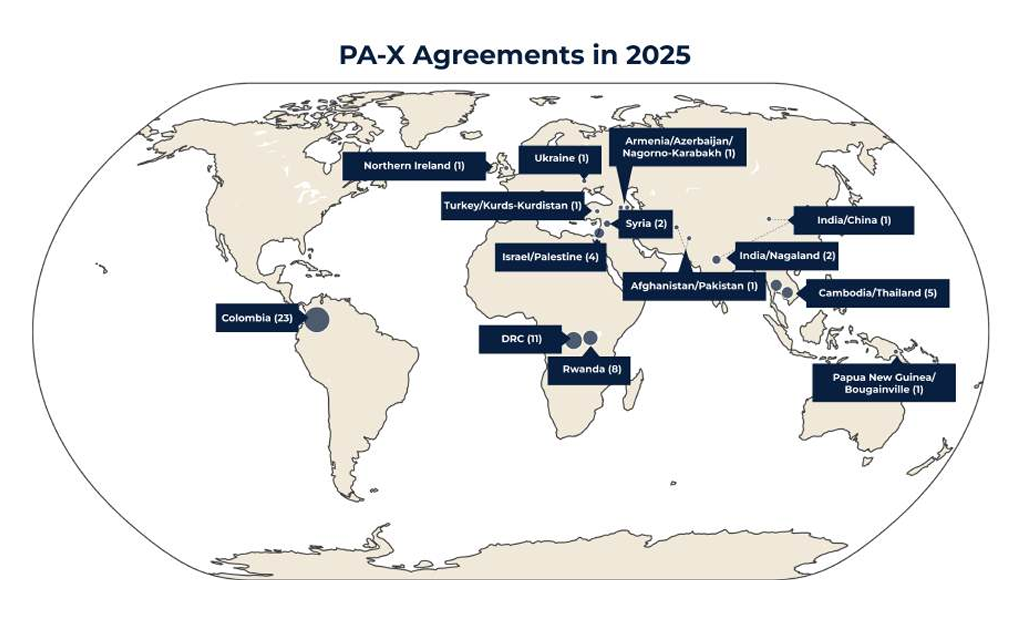
The research finds that peace agreements are becoming fewer, more fragmented, and increasingly internationalised. Since 1990, there have been over 2,200 formal, written, publicly available peace agreements across more than 180 peace processes. Most relate to conflicts within states, but the landscape of peacemaking has changed.
Formal, structured peace processes are no longer the norm; agreements are shorter and less ambitious, with fewer human rights and democratic transition provisions. Contemporary peacemaking increasingly operates through fragmented and “multimediation” environments involving multiple actors, tracks, and negotiation spaces.
Gender references in peace agreements: PA-X Gender Findings
This data report looks specifically at agreements included in PA-X Gender, which tracks the presence of any references to women, girls, gender or sexual violence.
The research finds that in 2025, 10 of the 54 peace agreements (19%) published on PA-X include at least one provision referencing women, girls, gender or sexual violence (excluding local agreements). This is a slight decrease compared to agreements in 2024 (23%) – a share that was heavily driven by gender-inclusive peace processes in Colombia – and identical to 2023 (19%).
Read the full PA-X data reports:
Peace Agreements in 2025: Insights from the PA-X Database
Gender References in Peace Agreements in 2025
Browse the headline findings:
Changing Peacemaking Practice: PA-X Key Findings
Current trends in mediation: MEND findings
Mediation in 2025 reached an inflection point, with interstate mediation increasingly embedded within internationalised intrastate conflicts rather than operating as a standalone diplomatic tool. Such mediation activity increasingly reflected not discrete wars, but overlapping conflict systems characterised by escalation of risks, regional spillover, and multi-actor entanglement.
Drawing on the second release of the Mediation Event and Negotiators Database (MEND), the new MEND data report analyses 1,344 mediation and mediation-related events across eight conflict affected contexts: Israel, Syria, Sudan, Libya, South Sudan, Yemen, Afghanistan, and Mali. The report offers key findings and recommendations designed to support peacemaking and mediation policy and practice.
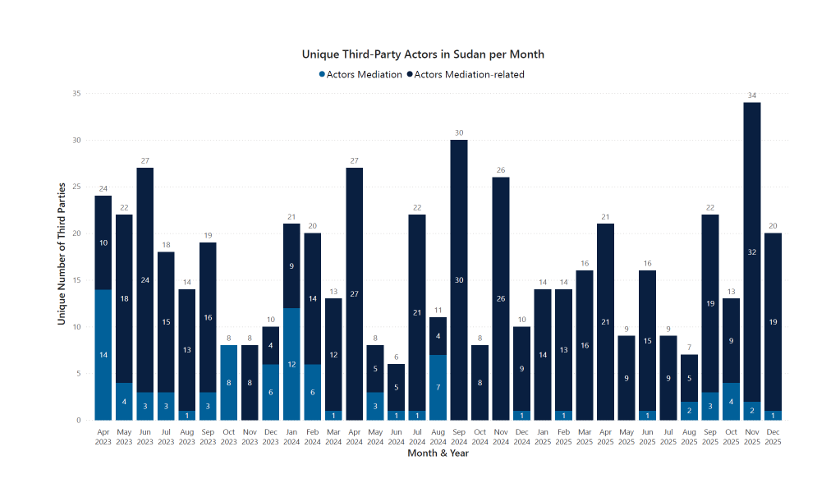
One trend highlighted in the report is a congestion of mediators in geopoliticised environments, as the image below shows for Sudan. More actors now possess the capacity to influence conflict management than at any point in the past, including states, international organisations, NGOs, and private actors.
Read the full MEND data report:
Mediation in 2025: Navigating overlapping conflict systems
Browse the headline findings:
Current Trends in Mediation: MEND Key Findings
About PA-X
As a cornerstone of PeaceRep’s PeaceTech work, the PA-X Peace Agreements Database is the world’s most comprehensive collection of peace agreements. PA-X data underpins a range of digital tools to support research, policy and practice, including visualisations, trackers, interactive timelines, infographics, and a mobile app.
About MEND
MEND offers a comprehensive record of peacemaking efforts within major armed conflicts, systematically tracking all mediation and mediation-related events involving external third-party actors—regardless of whether these efforts result in formal peace agreements.