The UN Secretary-General’s annual report on the women, peace, and security (WPS) agenda cites PA-X data on gender provisions in peace agreements, noting that peace agreements in 2025 focused on conflict management rather than conflict resolution, and that less than one fifth of agreements referenced women, girls, gender, or sexual violence.
Explore PeaceRep’s key findings on Gender, Peace and Security
UN Secretary-General’s 2026 Report on Women Peace and Security Cites PA-X Data
The United Nations Secretary-General’s annual report on the women, peace, and security (WPS) agenda marks the 26th anniversary of WPS by highlighting huge challenges for the agenda due to rising conflict, increasing backlash against gender equality, and rapidly decreasing funding for women’s rights work. These challenges are perpetuating an implementation gap described by the Secretary-General as “unacceptable”.
For the sixth year, the UNSG’s report draws on PeaceRep analysis to illustrate broader trends in the implementation of the WPS agenda through the lens of peace agreements, specifically the inclusion of agreement provisions with reference to women, girls, gender, or sexual violence.
The report cites data from the PA-X Peace Agreements Database on the percentage of peace agreements with provisions referencing women, girls, and gender issues from 1990 to 2025 – noting that in a world where inter-state conflict is on the rise, agreements resulting from inter-state agreements in 2025 did not contain gender references:
“In 2025, only 19 per cent of peace agreements worldwide (10 out of 53 agreements) included at least one reference to women, girls, gender or sexual violence, a drop from the year before (see figure I). In line with the previous year, most of the references appeared in partial agreements from Colombia, elevating the global average of signatories to 18 per cent. Most of the gender-specific references in 2025 pertained to women’s participation – affirming its importance, but without specifying substantive measures, such gender quotas. None of the 13 ceasefire agreements that were reached in 2025 and tracked by peace data consortiums named conflict-related sexual violence or other gendered forms of insecurity as prohibited acts. All agreements with gender-specific language pertained to intra-State conflict. Despite a higher degree of internationalization of conflicts and a significant rise in processes producing peace agreements to address conflicts between States, gender specific references remain absent from such agreements.” (p.4).
The report also highlights the changing nature of peacemaking, in that agreements are increasingly structured to contain or manage conflict, rather than seeking to comprehensively resolve disputes or to create conditions for durable peace:
“These trends are magnified in contemporary conflicts and peace negotiations. The past year has been marked by transactional closed-door negotiations with a focus on conflict management, rather than conflict resolution and addressing root causes. This situation has limited women’s access and ability to influence discussions and outcomes. Almost half of all peace agreements reached in 2025 were on pre-negotiation, process or ceasefire arrangements. Although these have helped to place a temporary halt on, or to reduce, hostilities, in many settings, they have not held or translated into comprehensive approaches or outcomes that can chart a path towards long-term political transformation and lasting peace. In several contexts violence has continued or re-erupted.” (p.4)
Read the publicly available version of PeaceRep’s analysis referenced in the report in this report from Laura Wise, Gender References in Peace Agreements in 2025: Insights from the PA-X Database and from Sanja Badanjak, Laura Wise, Adam Farquhar, Niamh Henry, Héloïse Guichardaz, Robert Wilson, and Tim Epple, Peace Agreements in 2025: Insights from the PA-X Database.
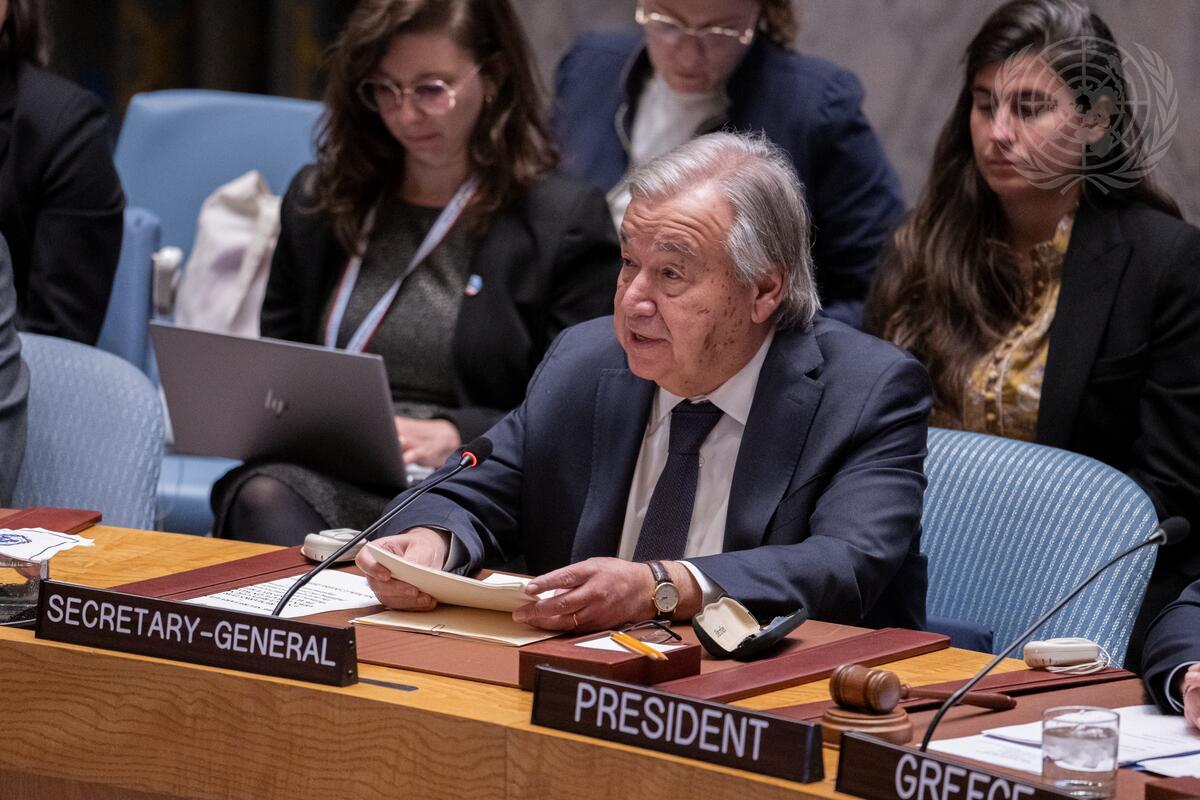
The Secretary-General’s report, delivered by António Guterres, informed the Security Council’s annual open debate on WPS, held on 27 October 2026. The annual debate, part of the ongoing efforts since the adoption of Security Council Resolution 1325 in 2000, aims to drive forward the WPS agenda, reinforcing the urgent need for greater inclusion of women in peace processes.
Read the research behind the report:
Gender References in Peace Agreements in 2025: Insights from the PA-X Database
Peace Agreements in 2025: Insights from the PA-X Database
Read the full UN Security Council report:
Report of the Secretary-General: Women, peace and security
Key highlights of the UNSG report (infographic)