Peace has many enemies. Civil society offers a light of hope.
Ten years after the peace agreement between the Colombian government and the FARC, Andrei Gómez-Suárez offers ten lessons from Colombia that might contribute to resilient peace processes.
This piece was first published on Substack on 21 October 2026.
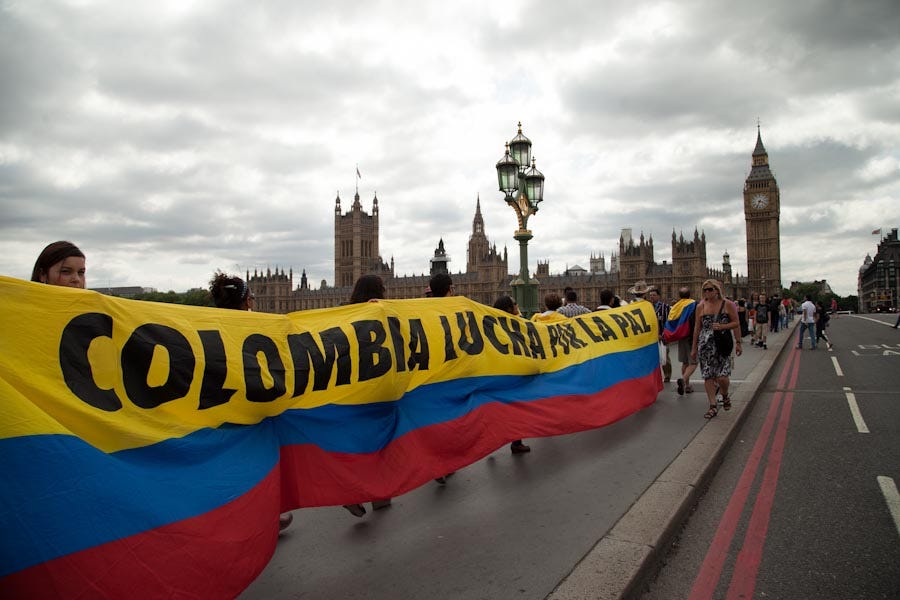
Colombia’s lessons for peace: Ten years after the Santos-Farc Accord
Ten years after the Santos-FARC Peace Accord, it is important to reflect about the lessons of building peace in Colombia so as to offer food for thought to current peacemaking efforts in a context of global conflict. Peace has many enemies. Here, I highlight ten lessons that might contribute to resilient peace processes.
The twisty path to peace
Colombia’s 2016 peace agreement is widely acknowledged as the most comprehensive peace agreement in the world. However, the road to peace did not start in Oslo in October 2012, when the Santos-FARC peace talks formally began: it dates back to 1982, 30 years before, when the Betancur administration (1982-1986) attempted to end Colombia’s armed conflict through negotiations with guerrilla groups – the Revolutionary Armed Forces of Colombia (FARC), the National Liberation Army (ELN), and the M-19, in particular.
The lessons learned from three previous failed attempts with the FARC were key in the secret negotiations that took place between 2010 and 2012 and paved the road to formal negotiations between the Santos administration (2012-2016) and the FARC. The formal negotiations lasted four years and the parties reached a 297-page peace accord which a minority of Colombians (50,000) rejected in the Peace Referendum on 2 October 2016.
Civil society took to the streets in demonstrations across Colombia to show support for the peace process. The parties decided to renegotiate the agreement, opening a national dialogue to collect recommendations from political, economic and social sectors opposing the agreement. As a result, a new accord, 310 pages long, amended to include 96 % of the demands by the leaders of the no-vote was signed by the parties and ratified by Congress in November 2016.
Implementation started on 1 December 2016. Yet to date, the fracture created by the Peace Referendum has not been resolved. It determined the outcome of the 2018, 2022 and 2026 presidential elections. Today the agreement faces challenging pressures coming from the new administration of Abelardo de la Espriella, who was originally a supporter of the accord and shifted sides to oppose its implementation radically as part of his election campaign.
Between 2016 and 2018, the last two years of the Santos administration, the priority was the disarmament and demobilisation of the FARC. A fast-track mechanism was created in Congress to approve the laws needed to offer legal guarantees to the FARC. These were connected with the creation of a transitional justice system comprised of the Unit for the Search of Disappeared People, the Truth Commission and the Special Jurisdiction for Peace.
In parallel, Santos negotiated with the ELN, but the parties did not succeed in making substantial progress in the 6-point agenda. Santos also held confidential talks with the Autodefensas Gaitanistas de Colombia (AGC) — a major criminal organisation which expanded after the partial demobilisation of paramilitary groups between 2003 and 2006. However, these talks derailed due to the opposition of Colombia’s Prosecutor Nestor Humberto Martinez to a draft law which aimed to offer alternative conditions for their surrender.
In 2017, the FARC laid down their weapons; the UN certified this process and decommissioned the weapons. A new political party, the Revolutionary Alternative Force of the Commons (“FARC”), was launched on 1 September 2017. An impartial committee selected the Director, Commissioners and Judges of the Unit for the Search of Disappeared People, the Truth Commission and the Special Jurisdiction for Peace and these three transitional justice institutions started operations in 2018. However, implementation faced a pitfall: the election of staunch critic of the peace accord Ivan Duque (2018-2022) as president of Colombia.
Duque undermined the work of the transitional justice system, but the pressure of the international community (the UK and EU, particularly) contributed to keep slow implementation of the special plans for regional development agreed in the peace accord in 170 municipalities, and to protect the transitional justice system. However, there was very little progress regarding other aspects of the accord, particularly land reform, coca crop substitution and ethnic and gender dispositions.
Killings of former FARC combatants increased substantially from 50 in 2018 to more than 400 in 2022. This contributed to the strengthening of dissident groups and the rearming of a few former combatants. Duque ended negotiations with the ELN and talks with the Autodefensas Gaitanistas de Colombia. At the end of his presidency the dissident groups of the FARC had grown from 400 to 3200 foot soldiers, the ELN was stronger than ever, and the AGC expanded to become the largest illegal armed group with over 15.000 foot soldiers.
Former M-19 guerrilla member Gustavo Petro was elected president in 2022 with the promise of bringing back on track implementation of the 2016 peace accord, reigniting negotiations with the ELN, and dealing with the causes of criminal violence and social unrest. Within the context of the peace accord with the FARC, Petro prioritised land reform, supported the transitional justice system and the reintegration of former combatants, and reignited a national coca crop substitution program. He strengthened the National Commission for Security Guarantees, yet the killings of former FARC combatants continued, though at a lower rate: 167 killings took place during his presidency. Between 2022 and 2026, the Petro administration opened 9 new negotiations, including with the ELN and the AGC. However, by the end of his presidency, none of them had reached a final peace agreement.
In June 2026, De la Espriella was narrowly elected president of Colombia (by a margin of 250.000 votes) with the promise of total war. In early September, he ended the 9 negotiations Petro had opened and threatened the existence of the Special Jurisdiction for Peace by cutting its budget and seeking a constitutional reform, passed a bill to cut the budget of the Office for Reintegration and Normalisation of former combatants and threatened Rodrigo Londoño, the last chief in Command of the FARC, with paying jail time.
Today, the modest gains of the peace process are under threat in Colombia. De la Espriella, like Duque, is aligned with Trump, and at least for the time being, as between 2017 and 2021, Trump is not interested in the business of making peace in Colombia.
Ten lessons for building peace
Between 2024 and 2026, I was a delegate for the Petro administration (2022-2026) in the negotiations with Comuneros del Sur, a dissident group of the ELN. Before that, between 2014 and 2018, I participated as a representative of civil society in the Santos-ELN negotiations, was a consultant for the international community in the Santos-FARC peace process, and joined the government to support implementation of the peace accord. In 2012, I set up Embrace Dialogue — an AngloColombian peacebuilding organisation which has rallied for negotiations and participated directly in peacemaking and peacebuilding efforts. What have I learned along the way?
First, peacemaking requires strong political leadership in order to build domestic and international credibility for the peace process. Leadership is key if implementation of peace accords is to ensure long-lasting peace.
Second, the participation of economic elites during negotiations helps build ownership which is useful for peace accord implementation.
Third, engagement of civil society can influence negotiations and build legitimacy for them and shield them from spoilers.
Fourth, negotiations require multiparty political support to show it is possible to build an interdependent future.
Fifth, changing military doctrine is fundamental to bring the military into negotiations — they must see peace as a form of victory.
Sixth, technical sub-commissions integrated by state institutions and insurgents can build trust between the parties and offer practical solutions to obstacles.
Seventh, international and domestic allies can nurture trust and ease tensions between parties and boulster civil society engagement.
Eighth, a realistic and concrete roadmap for peace helps parties make progress and deliver early victories.
Ninth, partial agreements and/or final accords enshrined into the legal framework anchor state commitment to implementation regardless of changes in government.
Tenth, only a vibrant civil society can protect implementation when a government unlawfully decides to derail peacebuilding efforts.
These ten lessons are important, but transitions are messy and unpredictable. There are no clear beginnings and ends, and the most important aspect is the commitment by civil society to continue building peace no matter what— this is the cornerstone of building an interdependent future without risking a relapse into full-scale violence.
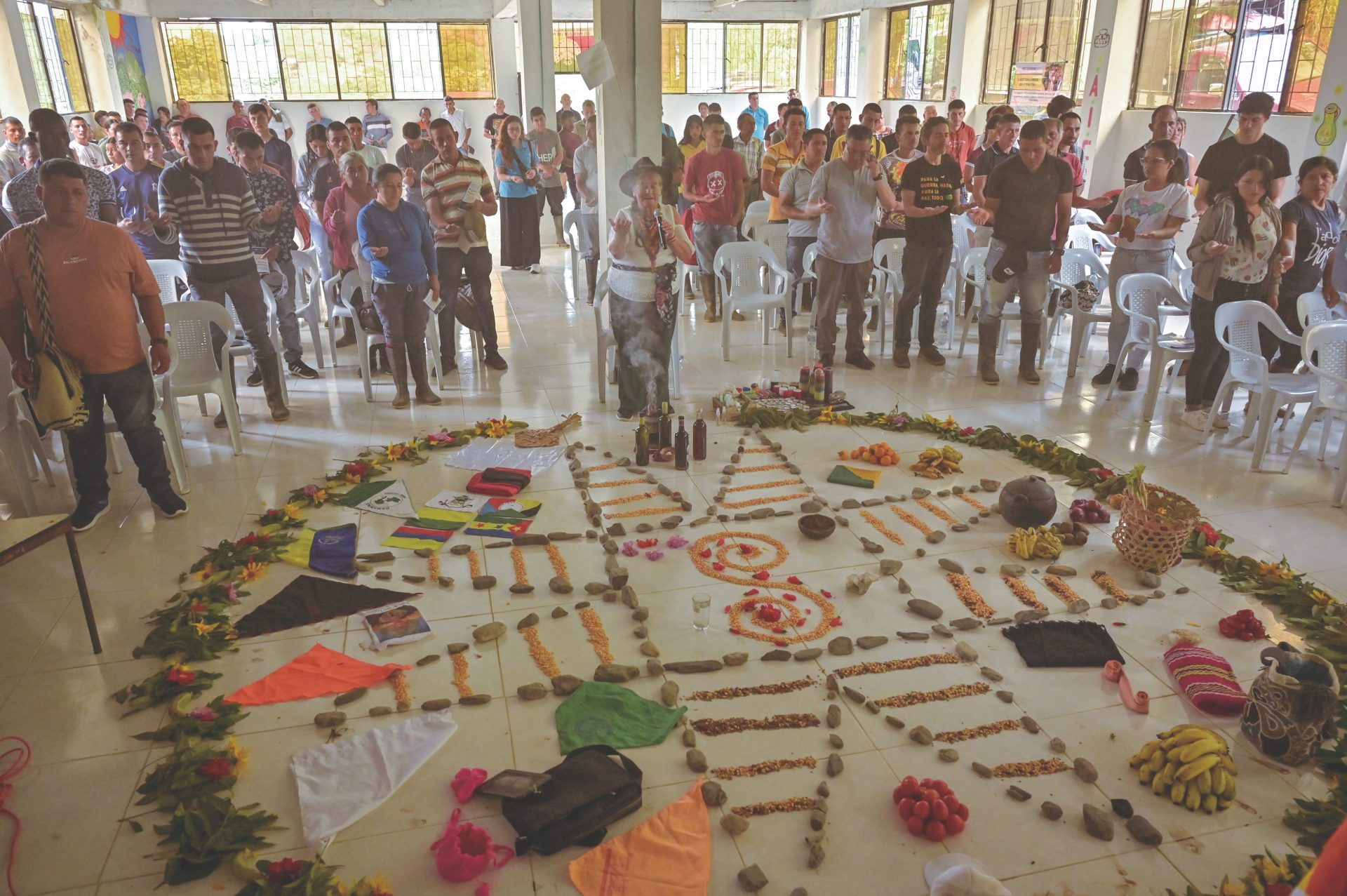
A light of hope
Today, Colombian civil society is coming together to defend the legacy of previous peace processes by (1) trying to use the judiciary to ensure the state honours its obligations ratified in previous peace accords, (2) taking to the streets to rally against the state’s denialism and seek to protect what has been an arduous process of historical memory construction, and (3) weaving a broad coalition to defy authoritarianism and militarism. By doing so, civil society organisations are standing up to the challenges of the present and can inspire others across the world.
Read the original post on Substack
Andrei Gómez-Suárez was part of the Colombian government’s delegation in a peace process in Nariño. He is PeaceRep Policy Affiliate and co-founder of peacebuilding organisation Rodeemos el Diálogo (ReD, or Embrace Dialogue), an AngloColombian peacebuilding organisation dedicated to supporting negotiated peace and building a culture of dialogue. He has lectured at the Universities of Bristol, Oxford, Sussex, and Winchester and has done consultancies for Conciliation Resources, the International Organisation for Migrations, and in Colombia for the Office of the High Commissioner for Peace, the National Centre for Historical Memory, and the Ombudsman’s Office. His books include Genocide, Geopolitics and Transnational Networks: a Contextualisation of the Destruction of the Patriotic Union in Colombia (Routledge, 2015), El Triunfo del No: la Paradoja Emocional detrás del Plebiscito (Icono, Colombia, 2016), and We are not made of sugar: a childhood memoir from Colombia (Fuller Vigil 2025).