Peace is political. Building peace goes in tandem with strengthening Colombian democracy. Both are at stake in Sunday’s presidential election.
Andrei Gómez-Suárez reflects on the ongoing territorial peace co-construction process with Comuneros del Sur in Nariño.
This post was first published on Substack on 18 June 2026.
The Peace at Stake in Colombia's Election
Each war ends in its own way. In Colombia, the ongoing armed conflict started in 1964 when the Revolutionary Armed Forces of Colombia (FARC) emerged, but the country has been seeking peace since 1982, when the government and the FARC sought for the first time a negotiated solution.
War and peace have coexisted ever since. The degenerate war has left more than 9 million victims, and at least 6 peace deals with different armed groups, some more successful than others – yet the violence persists and recycles.
I grew up in the middle of the entanglement between war and peace. I saw my political heroes fighting for peace get killed on a daily basis. They were members of the Patriotic Union (UP), a party created in the first peace process with the FARC, which failed because of the political genocide of the UP.
Perhaps the Colombian peace deal most well known worldwide has been the 2016 Peace Accord with the FARC. The inclusion of land reform, political participation, dealing with illicit drugs, addressing victims’ rights and a process of demobilisation, disarmament and reintegration makes it the most comprehensive peace agreement the world has seen to date.
I participated in the peace process with the FARC. In the complex peacemaking ecosystem, which felt to me like a patchwork, I participated in tracks 2 and 1.5 -supporting dialogue among different sectors of civil society but also between civil society and the negotiating parties to ensure widespread buy-in of the accord.
By 26 August 2016, the day of the signing of the final peace deal, I had travelled around the country explaining the 297-page deal to different sectors of society. The rejection of the deal in the peace referendum on 2 Oct 2016 was a massive blow for ending the war, and to a large extent has contributed to the recycling of violence since then, due to the difficulties it created for implementation.
In 2022, the administration of Gustavo Petro embarked on an ambitious policy called “Total Peace”, which aimed to negotiate with all the major illegal armed groups in Colombia and step up implementation of the 2016 Peace Accord. To date, there are 9 parallel negotiation tables underway.
In 2024, I became one of the delegates of president Petro to the peace process with Comuneros del Sur – a dissident faction of the National Liberation Army guerrilla group, which was created in 1965 a year after the FARC by a group of students returning from Cuba to bring about a revolution mirroring the example of Fidel Castro and Che Guevara.
My participation in track 1 peacemaking has shown me a different way of building peace. Instead of negotiating outside Colombia as President Santos’ government (2010-2018) did with the FARC, we have been engaged in a process we call “territorial peace co-construction” in Colombia’s Southern department of Nariño on the Ecuadorian border.
To end the war with Comuneros del Sur, we:
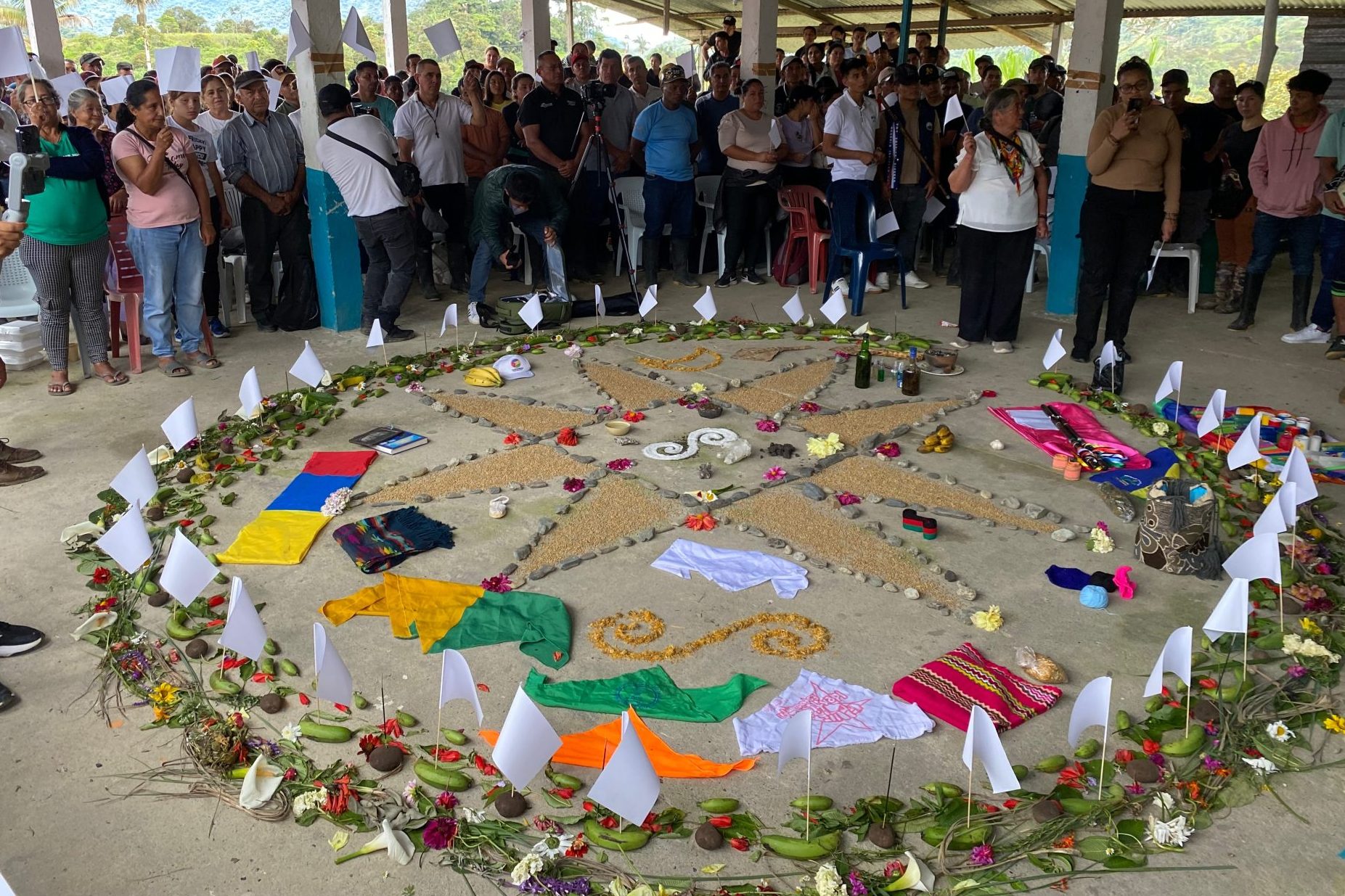
1. Listened to local communities (often around mandalas made with agricultural produce from the region).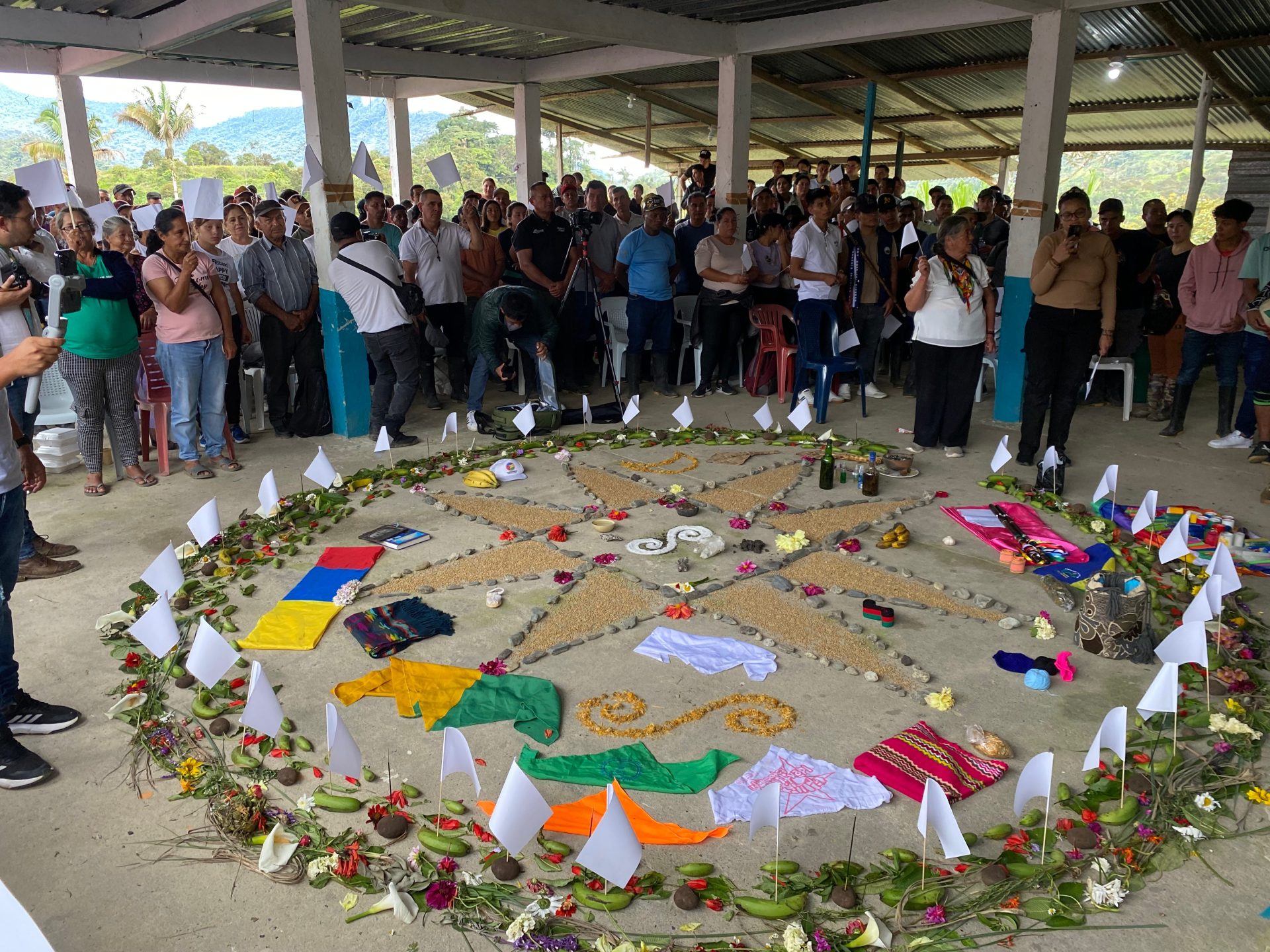
2. Agreed a roadmap for peace, engaging a wide range of stakeholders (state, business, women and youth organisations, etc).
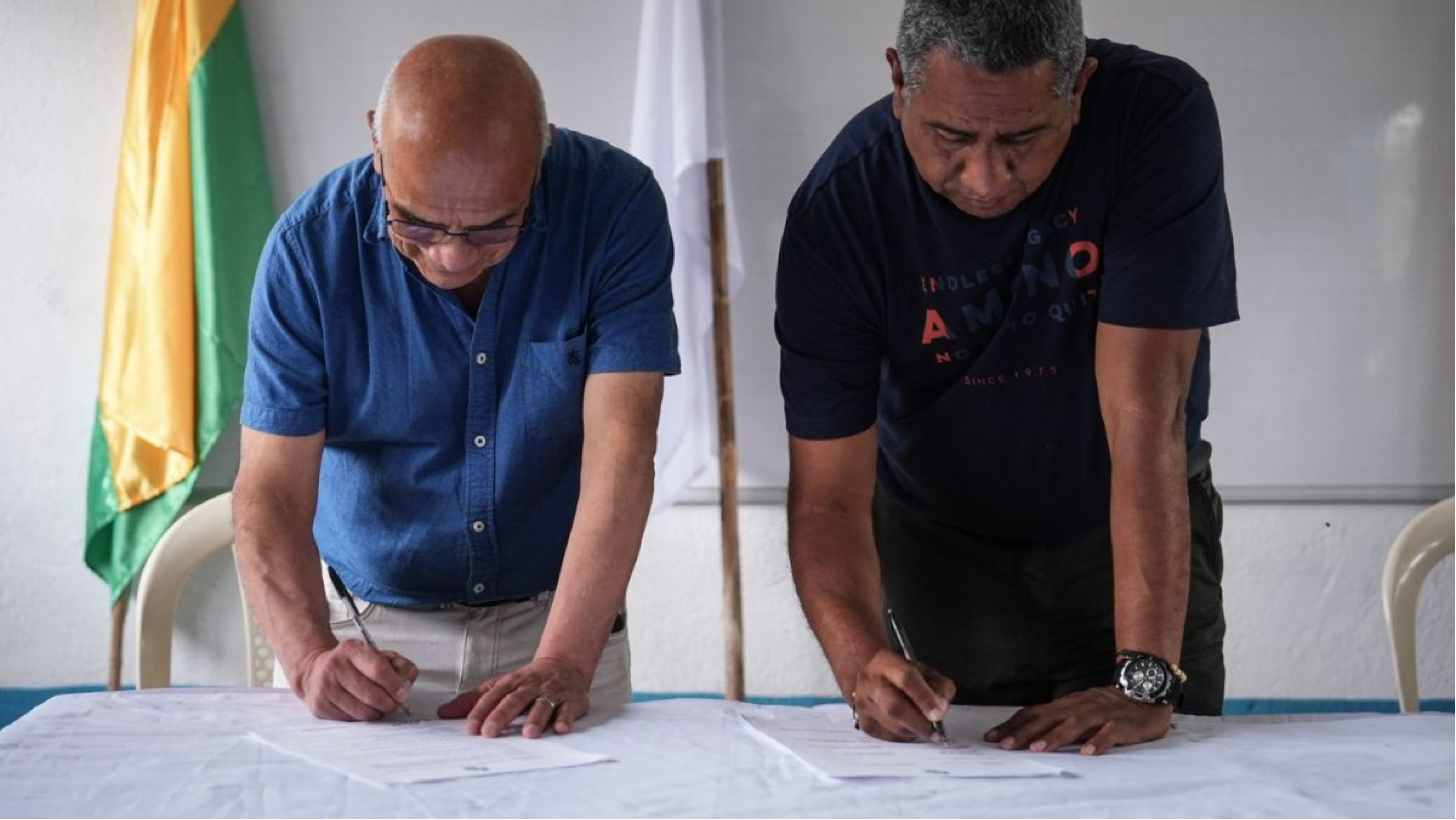
3. Presented the roadmap to local and national sectors of society (in Pasto on 19 July 2024).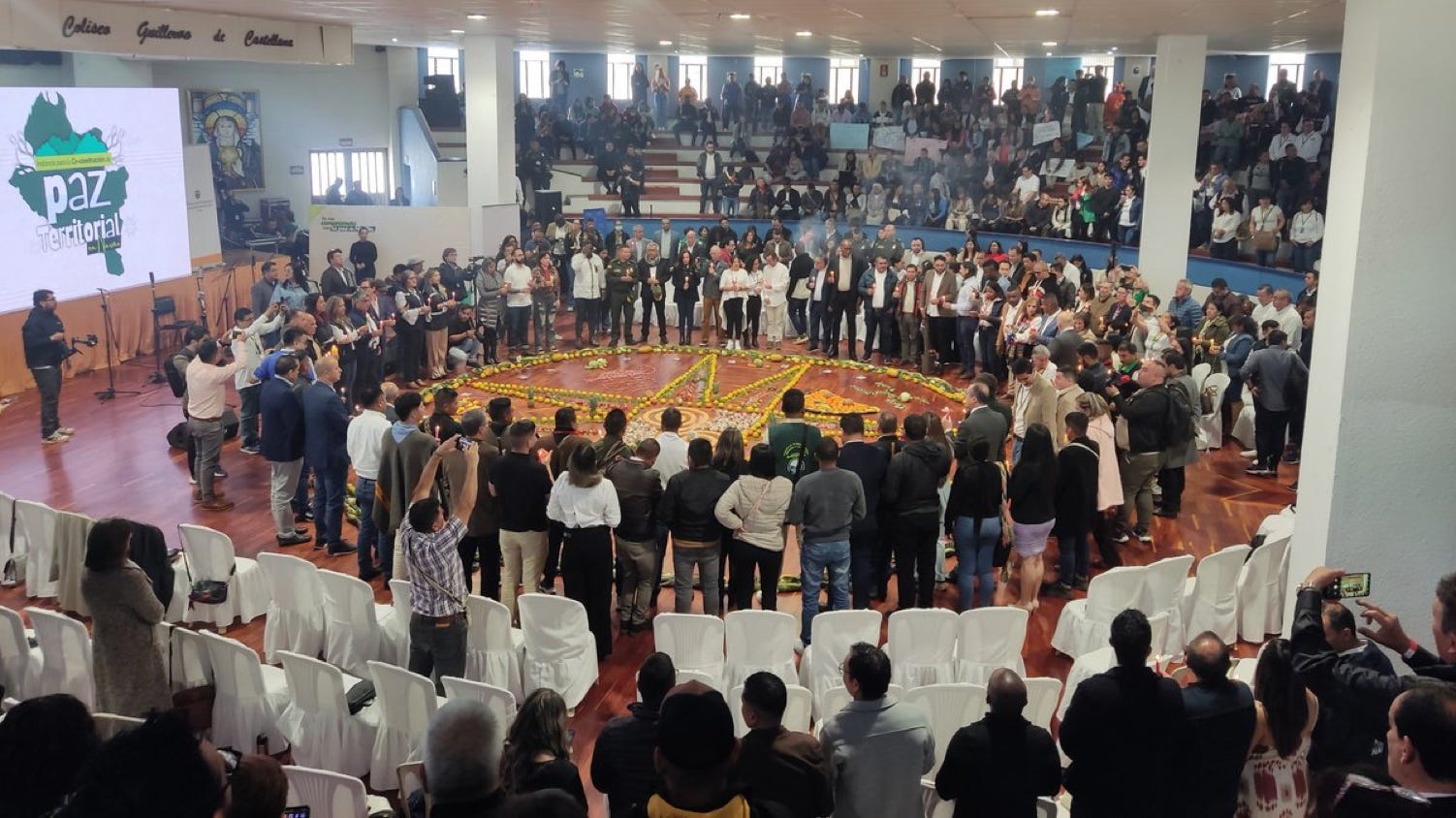
4. Met with foot soldiers, middle rank and top commanders of Comuneros del Sur to understand their needs and design a fair process of reintegration.
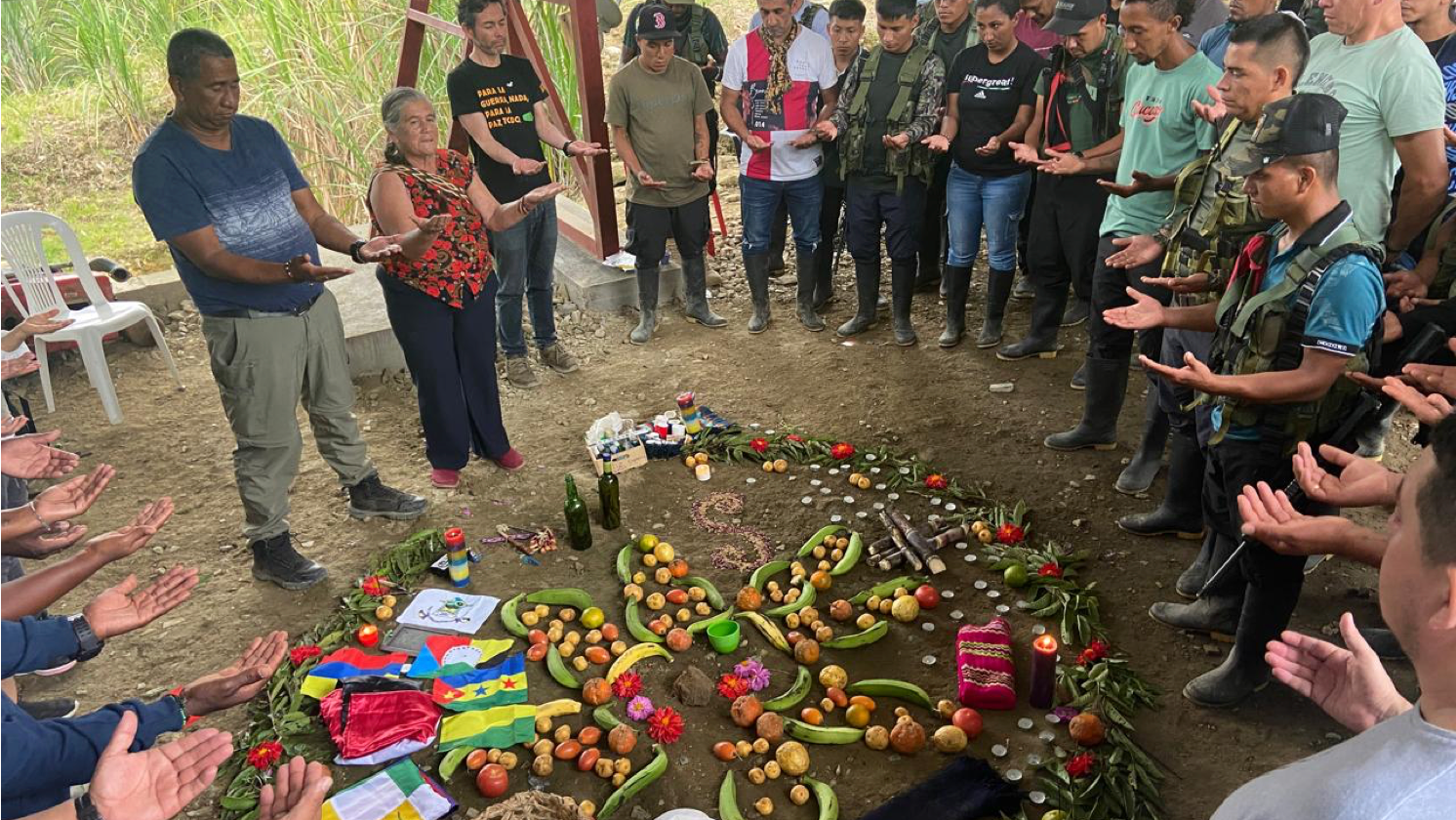
5. Started an early mine action programme to build trust between the parties and communities. The international humanitarian demining organisation Humanity & Inclusion (HI) has destroyed 28 land mines and improvised explosive devises.
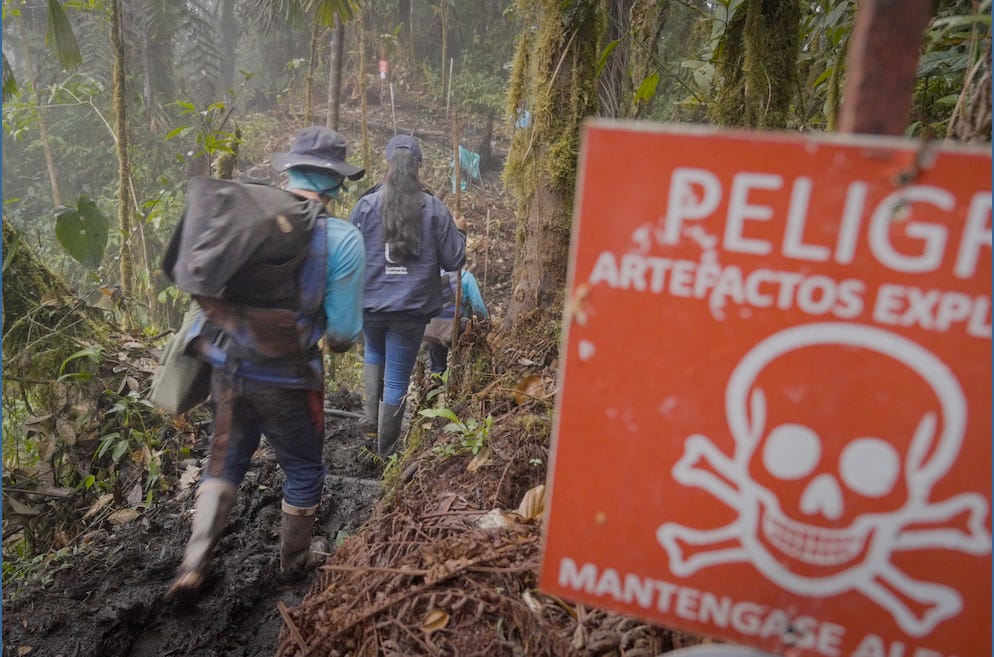
6. Destroyed a stockpile of weapons of Comuneros del Sur solidifying our commitment to peace. The Organisation of American States (OAS) verified the destruction of a ton of weapons carried out by the Colombian army.
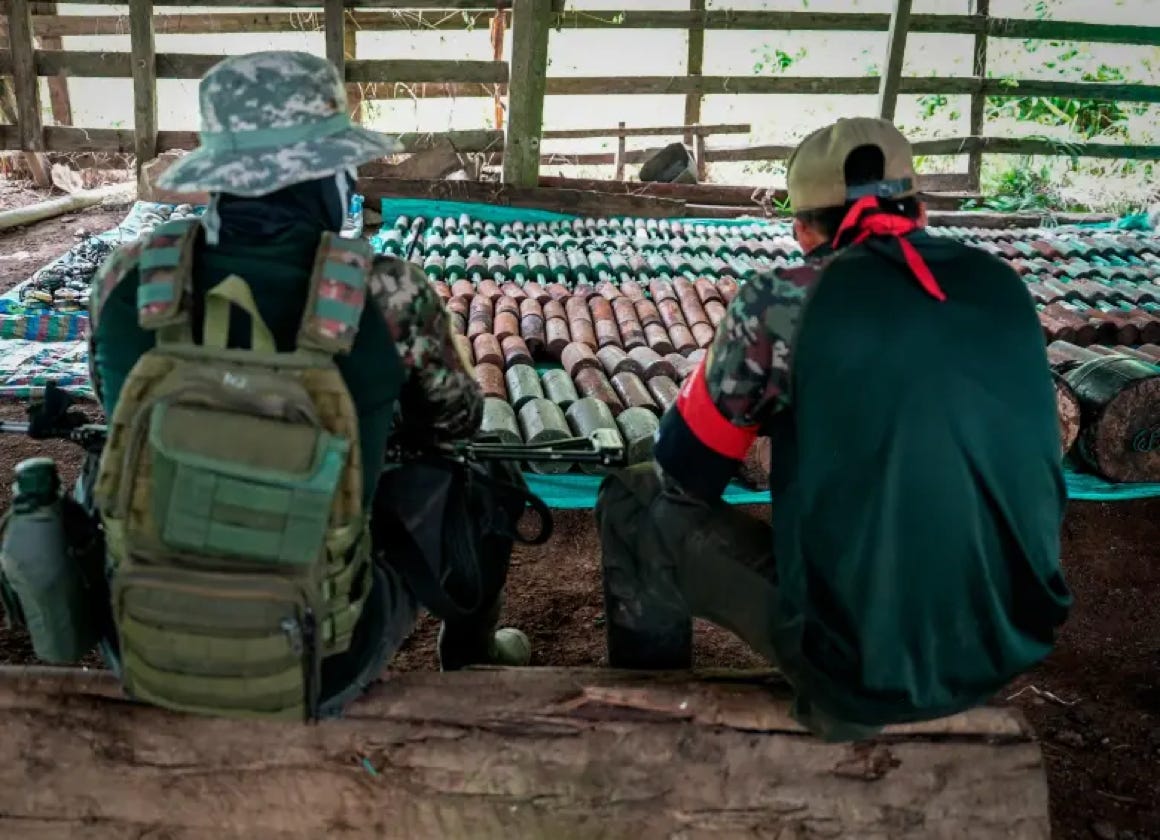
7. Began a process of restorative justice searching for disappeared people with input from Comuneros del Sur and setting up a sub-commission to protect children affected by war. The Unit for the Search of Disappeared People (created by the 2016 Peace Accord) has recovered thirty bodies, and 12 children have returned to their families and rejoined their families, with accompaniment from the Colombian Institute of Family Welfare (ICBF).
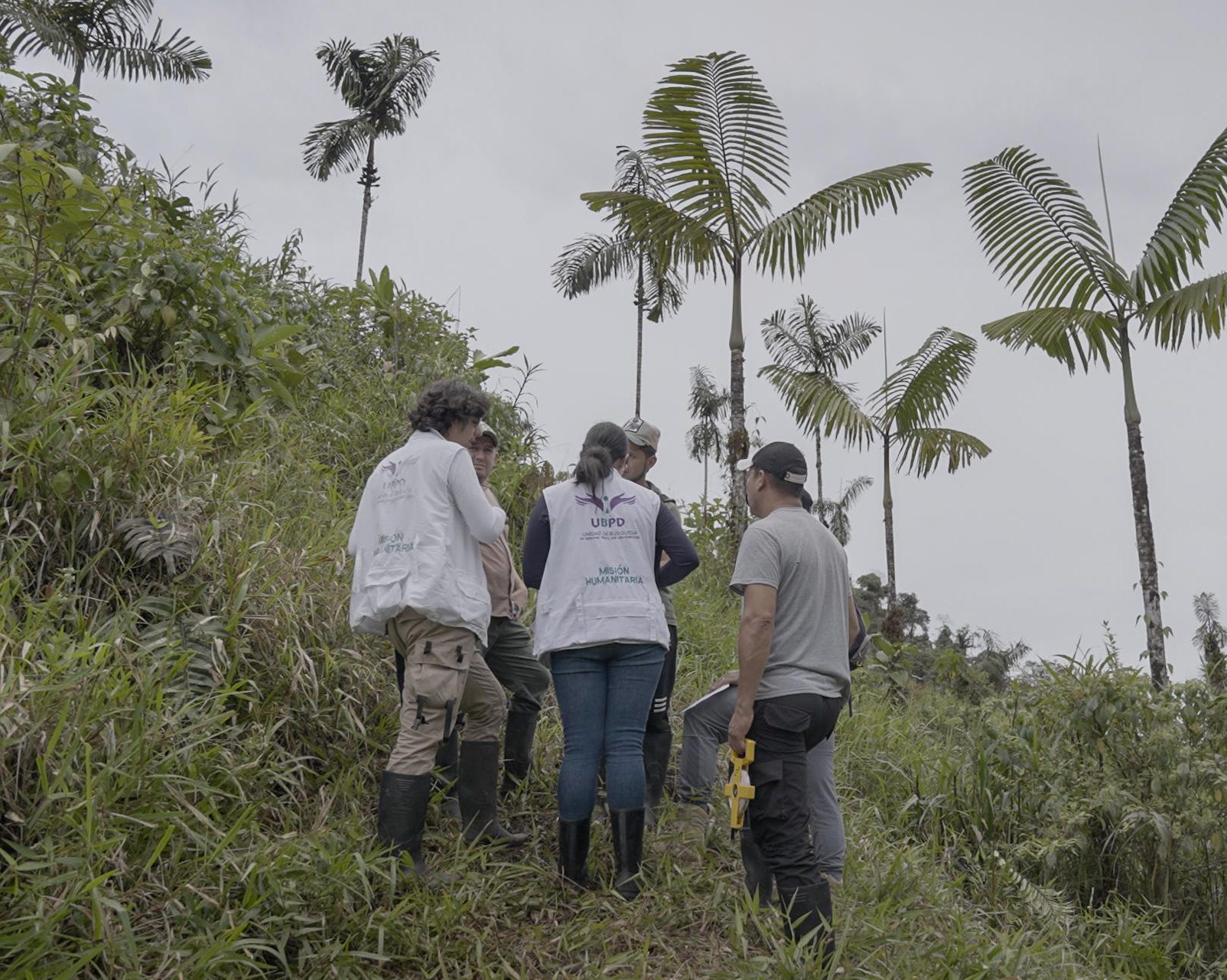
Overall, to date, we have reached 12 partial agreements — such as coca crop substitution, training on democratic skills, and truth-telling — most of which are under implementation. In July 2026, the National Centre for Historical Memory will launch a 600-page report, based on victims’ testimonies and interviews with combatants, helping us to understand the impact of the conflict and offering policy recommendations. The war has not ended. We have not signed an agreement for the transition of Comuneros del Sur to civilian life yet, but we have made progress in rebuilding part of the social fabric in Nariño and building an innovative peace infrastructure.
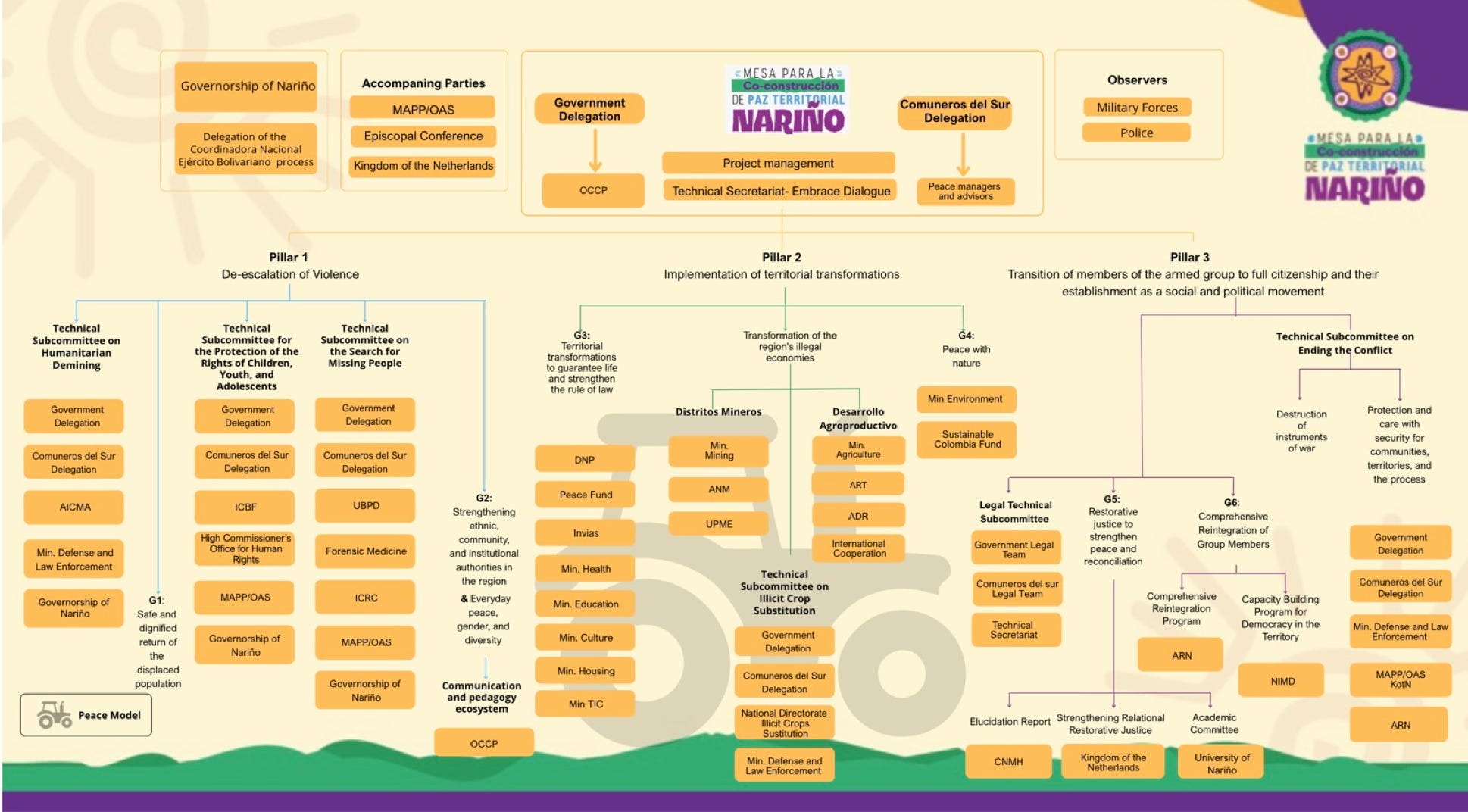
If there is political commitment in the next administration, this infrastructure could endure, building on the agreements achieved thus far and bringing about sustainable peace. But peace is political, and the continuation of Petro’s Total Peace policy is at the centre of the current presidential race. If the outcome of Sunday’s elections is a turn to the far right, the robustness of territorial peace co-construction will be tested to the limit.
Wars do not end straightaway. For peace to be antifragile — meaning for it to grow stronger from volatility, chaos, and stress — peace requires the engagement of the broadest possible group of stakeholders, to strengthen it and let it flourish. Grassroots organisations and state institutions are not enough. Without the arts and the media, peace is vulnerable. Building peace goes in tandem with strengthening vibrant democracies. This is the lesson Colombia has taught us over the last ten years during the implementation of the peace agreement with the FARC and the ongoing territorial peace co-construction process with Comuneros del Sur in Nariño. Let us hope that Colombians have learned the lesson and elect a president committed to the long journey of peace and reconciliation.
Photos: Office of the High Commissioner for Peace of the Colombian Government
Read the original post on Substack
Andrei Gómez-Suárez is a delegate of the Colombian government in the peace process with guerrilla group Comuneros del Sur, and founder of the Rodeemos el Diálogo (ReD) Foundation, an AngloColombian peacebuilding organisation dedicated to supporting negotiated peace and building a culture of dialogue.
Andrei has also taught and/or conducted research at numerous universities and organisations in the UK and Colombia, including the University of Edinburgh, Oxford, Bristol, Sussex, UCL, SOAS, Los Andes, Externado, and Cauca, as well as providing consultancies for the Office of the High Commissioner for Peace, the National Centre for Historical Memory, and Conciliation Resources.
Andrei’s research and publications focus on the Colombian peace process, transitional justice, and conflict resolution.