Amnesties Database
Amnesties, Conflict and Peace Agreements Database
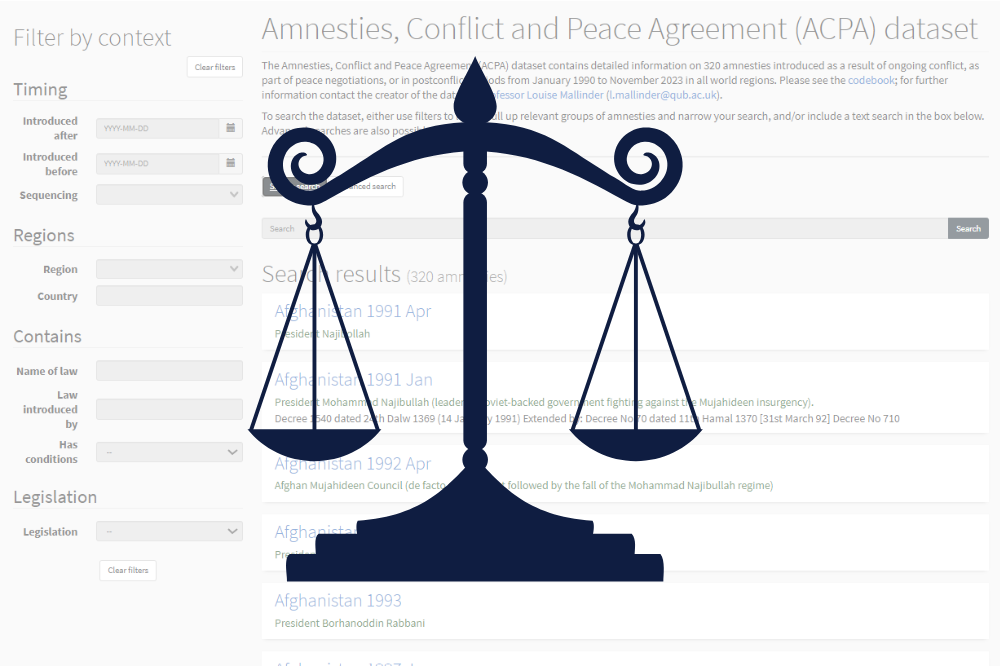
The Amnesties, Conflict and Peace Agreement (ACPA) Dataset provides detailed qualitative descriptions of amnesty processes.
Developed by Queens University Belfast, the ACPA contains detailed information on 320 amnesties introduced as a result of ongoing conflict, as part of peace negotiations, or in post-conflict periods from January 1990 to November 2023 in all world regions.
Amnesties are measures that seek to remove criminal liability for wrongdoing. They are often used during armed conflicts or as part of negotiated peace settlements to reduce the violence and contribute to sustainable peace.
The ACPA provides descriptions of key themes relating to the scope and legal effects of different forms of amnesty, together with information on when and how they are implemented to remove criminal liability for conflict-related offences.
The ACPA explores the context in which the amnesty was introduced – such as timing or regime type, and the process of introducing the amnesty. It also looks at the categories of persons who benefited from the amnesty or were excluded from its terms, and the conditions that amnestied persons must comply with to obtain or retain amnesty.
The dataset also examines key areas such as the crimes that are included or excluded from the amnesty, the effects of the amnesty on criminal justice, civil remedies and administrative accountability processes.
Team
The ACPA was created by Professor Louise Mallinder of Queen’s University Belfast School of Law and the PeaceRep team at Edinburgh Law School.
| Image | Title | Authors | Pub Date | Themes | Countries | hf:tax:authors | hf:tax:themes | hf:tax:countries |
|---|
| Image | Title | Summary |
|---|