What do peace processes look like when the current United States administration is an interested party? Laura Wise and Adam Farquhar examine the White House’s claims about recent American peacemaking efforts.
The authors use data from the latest version of the PA-X Peace Agreements Database to demonstrate that none of the conflicts that the White House claims to have ended were resolved through US mediation.
Ending wars or making deals? What PA-X data say about American mediation in 2025
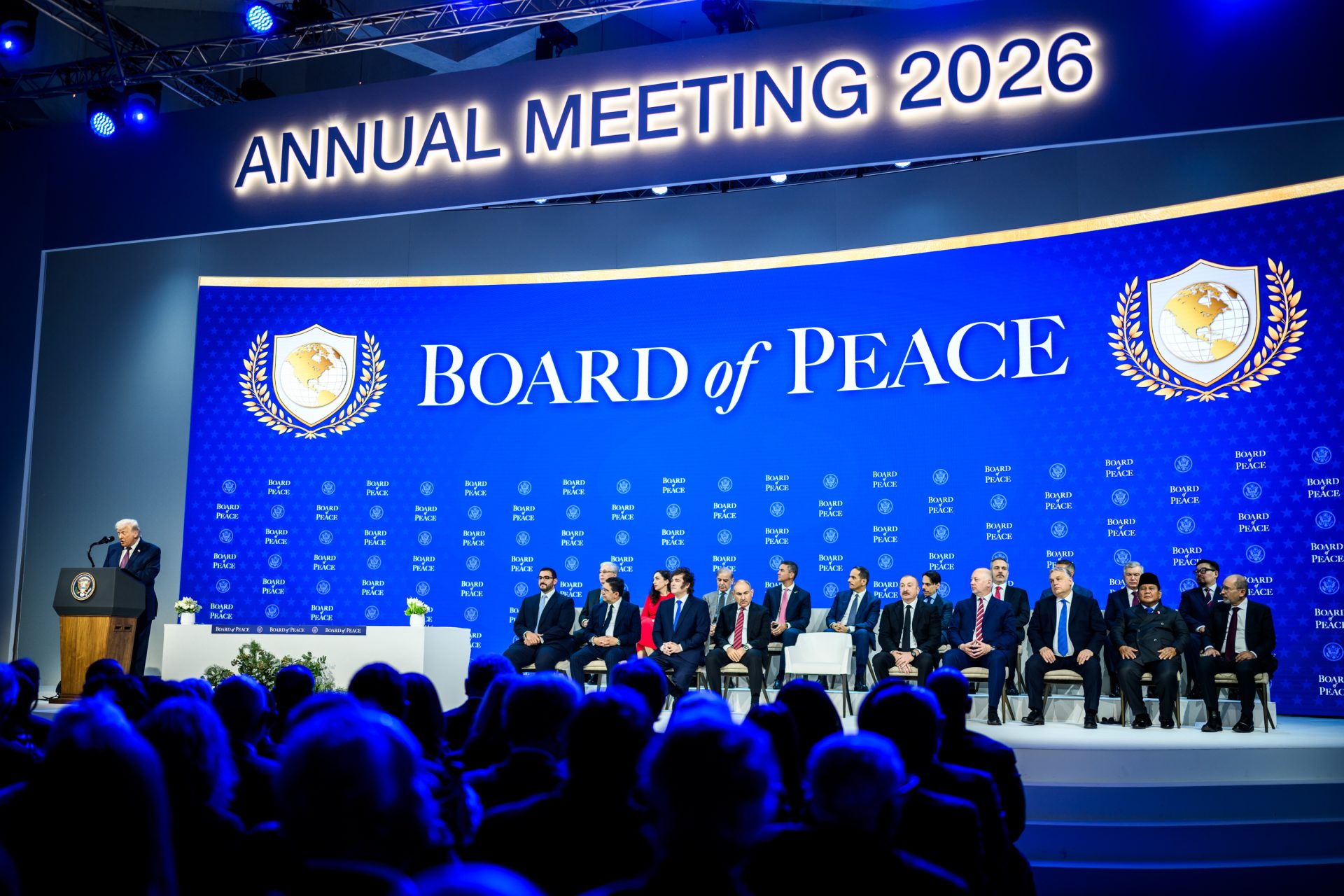
In February 2026, the White House claimed that the “President of Peace”, Donald Trump, had successfully negotiated an end to eight long-standing conflicts: between Armenia and Azerbaijan, the DRC and Rwanda, Egypt and Ethiopia, Israel and Hamas, Israel and Iran, Kosovo and Serbia, Pakistan and India, and Thailand and Cambodia. This announcement was not new. Trump’s repeated celebration of his success in mediation, his identification as the ‘world’s best peacemaker’, and his explicit pursuit of a Nobel Peace Prize have all become hallmarks of international relations discourse since he began his second term as US president in January 2025.
In April 2026, researchers at the University of Edinburgh released Version 10 of the PA-X Peace Agreements Database. PA-X is a global collection of formal peace agreements, spanning the period from 1990 to 2025. Now containing 2,257 agreements from over 170 peace processes worldwide, it is the most comprehensive global resource on peace agreements. The addition of 63 agreements for 2025 means that we can scrutinise the White House’s claims about recent American peacemaking efforts and reflect on what peace processes look like when the current US administration is an interested party.
Of the conflicts that the White House claims that Trump ended through his efforts as a negotiator and peacemaker in 2025, PA-X Version 10 contains peace agreements for only half: Armenia and Azerbaijan, the DRC and Rwanda, Israel and Hamas,[1] and Thailand and Cambodia. This discrepancy results from a combination of both exaggeration on Trump’s behalf, and the PA-X methodology for including some agreements and not others. However, we can confidently say that none of the conflicts that the White House refer to have “successfully ended” because of US mediation, and that some of the conflicts or disputes mentioned have actually worsened during Trump’s tenure.
In the cases of Egypt/Ethiopia and Kosovo/Serbia, the discrepancy between the White House and PA-X seems to be a case of US exaggeration. Whilst Egypt and Ethiopia can be described as engaged in a diplomatic conflict over the Nile watercourse, neither state has resorted to armed violence, and the dispute has not evolved into warfare. Contrary to US claims, the two countries did not reach any agreement to resolve the dispute in 2025. Rather, diplomatic relations between Cairo and Addis Ababa have deteriorated since Ethiopia inaugurated the Grand Ethiopian Renaissance Dam (GERD) in September 2025 and announced the construction of three further dams in the Blue Nile region.
In Kosovo and Serbia, PA-X also does not record any peace agreements having been reached in 2025, with the last entry for agreement between the two countries recorded as the Declaration on Missing Persons in 2023, which was brokered by the European Union under the auspices of the Brussels Dialogue. During Trump’s first term, the US did broker limited economic and airspace agreements, including a memorable American initiative to rename the contested Lake Gazivode/Ujman in northern Kosovo as ‘Lake Trump’. As with Egypt and Ethiopia, Kosovo and Serbia do not currently reach the Uppsala Conflict Data Programme threshold for active armed conflict. Instead, Serbia’s recognition of Kosovo and the integration of Serb-majority municipalities in the north remain contested, with sporadic violent incidents and ongoing ethnic segregation. Trump’s claims to have prevented a war in 2025 were met with scepticism by regional experts, who argue that the US has been markedly disengaged with the Balkans compared to his first term, instead focussing attention on conflicts in the Middle East and Ukraine.
Another reason for the discrepancy between PA-X and the White House relating to Pakistan/India and Israel/Iran is the inclusion criteria for PA-X, which analyses the textual content of ‘publicly available texts’ as agreements. This requirement means that mere announcements of ceasefires having been reached are not included on PA-X, even though such announcements are an important part of negotiations in some contexts. Therefore, the White House is not wrong when it claims that agreements were reached in some of the aforementioned conflicts, but we do not include them on PA-X.
Although a ceasefire was announced between Pakistan and India in May 2025, the agreement text was not published and therefore was not included in PA-X. Similarly, Trump announced a ceasefire on social media between Israel and Iran in June 2025, but this was also not a published text. However, even if both ceasefires had been published and included on PA-X, neither support the claim of having ‘solved’ those conflicts. Regional experts have argued that the ceasefire between Pakistan and India “does not address any of the underlying grievances in the bilateral relationship”, whilst in February 2026 the US and Israel launched joint airstrikes on Iran (a fragile, temporary ceasefire is in existence at time of writing).
Turning to the conflicts that both the White House and PA-X list as having reached agreements in 2025, we can identify both a clear variation in terms of the extent of the US’s engagement, and consistency in the limitations of all the resultant deals. By scrutinising the trajectory of the processes and the content of the agreements for the following conflicts in 2025, PA-X data supports existing expert assessment of Trump not as a ‘peacemaker’, but a ‘dealmaker’, and further debunks his claim to have successfully ended conflicts around the world in the first year of his second presidential term.
Take Armenia and Azerbaijan first. The August 2025 Joint Declaration between Armenia and Azerbaijan, signed in front of Trump at the White House, was perhaps the most high-profile of the year’s deals. But despite its ceremony, the agreement does relatively little. PA-X categorises it as a process agreement: its primary function is to close the Organization for Security and Co-operation in Europe (OSCE)-led Minsk process and set a framework for future negotiations, rather than to resolve the core incompatibilities between the two states. The text gestures at substantive issues, border delimitation, cross-border connectivity, and the linkage between Azerbaijan and its Nakhchivan Autonomous Republic through Armenian territory. But these remain rhetorical commitments rather than detailed arrangements.
The Thailand–Cambodia process tells a different story, but one that similarly falls short of resolution. Over the course of 2025, the parties reached five agreements, every one of which PA-X codes as a ceasefire or ceasefire-related agreement. Although later texts occasionally nod toward border delimitation and cross-border linkages, the operational focus remains tactical and transactional throughout: ceasefire provisions, armed forces management, and prisoner release. Rather than building toward a substantive framework that addresses the underlying sovereignty of the disputed territory, the Trump Administration generated a sequence of temporary military stand-downs. This is crisis management, not peace-making.
The limits of transactional diplomacy are starker still in the agreements between Israel and Hamas. PA-X records four agreements in 2025, none of which rises to the level of a substantive framework agreement. Strikingly, the most operationally detailed of the four is also the earliest: the January 2025 document establishing procedures for hostage and prisoner exchanges, which contains the strongest prisoner release provisions of any agreement in the series. The grandly titled October Trump Declaration for Enduring Peace and Prosperity, by contrast, is coded merely as ceasefire-related and contains no prisoner release provisions at all. Its accompanying Implementation Steps is a pure ceasefire agreement, with weaker prisoner release mechanisms than the January text. None of the four agreements contains provisions for self-determination, political power-sharing, or long-term human rights frameworks, and only the January document briefly references state definition. The November UN Security Council Resolution 2803 is the most institutionally ambitious of the four, authorising the establishment of a Board of Peace as a transitional administration and an International Stabilisation Force. Yet even here, core political questions are deferred: the resolution gestures towards eventual Palestinian self-determination and statehood only after a reform programme has been ‘faithfully carried out’ and contains no provision for political power-sharing or prisoner release. As tools for managing acute crisis, these deals had their moments; as a settlement to the underlying Israeli–Palestinian conflict, they offer little.
The 2025 agreements regarding the Eastern DRC reveal yet another variation of American mediation: economic dealmaking standing in for localised peacebuilding. The Regional Economic Integration Framework’s (REIF) focus on cross-border trade, resource exploitation, and special economic zones illustrates how this approach bypassed the AFC/M23 rebels who actually hold territory in the eastern borderlands. All agreements in this interstate track are bilateral treaties between the DRC and Rwanda regarding an internal conflict, rather than agreements with the conflicting parties themselves. The actual intrastate track with M23 in Doha reached only the partial substantive stage by late 2025, despite being titled The Doha Framework for a Comprehensive Peace Agreement. This highlights a dealmaker approach that secures top-down pacts on exploitation of natural resources, whilst leaving internal political resolution incomplete.
In reality, for most of the conflicts featured on PA-X that the White House takes credit for reaching a deal, the US mediated in conjunction with other third parties. For example, the Doha process for the DRC and Rwanda was jointly mediated by the US, Qatar, Togo (serving as African Union mediator), and the African Union Commission. Although the US took a lead role in negotiating between Israel and Hamas, Egypt, Turkey, and Qatar were also key third parties at different points in that process, with Qatar receiving an unprecedented Israeli airstrike on a negotiation meeting held in Doha. Whilst the US was involved in the Thailand and Cambodia process, utilising trade agreements as a carrot to bring parties to the table, Malaysia, as an experienced mediator in the region and the 2025 chair of the Association of South East Asian Nations (ASEAN), is arguably equally responsible for mediating, with China also involved in the July and December talks. The exception is Armenia and Azerbaijan; however, the conditions under which parties were willing to meet is something that Trump inherited from previous developments. Those events include the dissolution of the Nagorno-Karabakh enclave following Azerbaijan’s 2023 offensive, which was the core territory under dispute, and a 2024 exclusively bilateral deal which resolved the delimitation of four villages on a strategic part of the countries’ contested border.
Looking back on American mediation in 2025, the whirlwind of diplomatic activity did produce limited results: conflict parties negotiated, and, in some contexts, did indeed reach agreements. But PA-X shows that none of the conflicts that the US claim to have “successfully ended” can be considered as such, and developments on the ground in early 2026 are a testament to the limitations of dealmaking over peacemaking. There are also the deals to end armed conflict that the US could not broker. In an age of disaggregated mediation, where conflict parties can forum-shop for mediators that best suit their interests, the US has struggled to reach agreement between the Sudanese Armed Forces and the Rapid Support Forces in the congested arena of Sudan. Meanwhile, Trump’s volatile approach to the Russia-Ukraine war has failed to bring the parties towards the type of substantive agreement that is needed to end the conflict, despite the US’ economic and military might.
Neither of these contexts represent sole US failures: the multiplicity of mediating actors, and the blurred lines between internal and inter-state conflict mean that no one country can bring parties into a negotiated settlement. However, an increasingly unreliable US as a diplomatic partner makes coherent multilateral approaches almost impossible, and the primacy of US extractive interests reduces the sustainability of any future peace that might be reached through agreements.
[1] Agreements related to the conflict between Israel and Hamas are classed under the country/entity dyad of Israel (Palestine). For consistency with the State Department press statement, throughout this blogpost we refer to ‘Israel and Hamas’, even though the conflict involves other actors and is more complex than this dyad suggests. See further: Bell et. al, (2026). PA-X Codebook, Version 10. Peace and Conflict Resolution Evidence Platform (PeaceRep), University of Edinburgh.
Laura Wise is a Senior Research Fellow with PeaceRep at Edinburgh Law School. She is part of the research team behind the PA-X Peace Agreements Database.
Adam Farquhar is a Research Associate and Data Officer with PeaceRep at Edinburgh Law School. He supports the management, development, and coding of the PA-X Peace Agreements Database and its sub-databases.