Since 2021, tens of thousands of families linked to individuals associated with ISIS have been repatriated to Iraq from Al-Hol camp in northeast Syria. Many pass through the ‘Hope’ rehabilitation centre before returning to communities.
Drawing on fieldwork and interviews, Kamaran Palani examines the challenges returnees face as they rebuild their lives, many of whom have no living memory of life beyond the Syrian camps.
This blog was originally published by the LSE Middle East Centre on 7 October 2025.
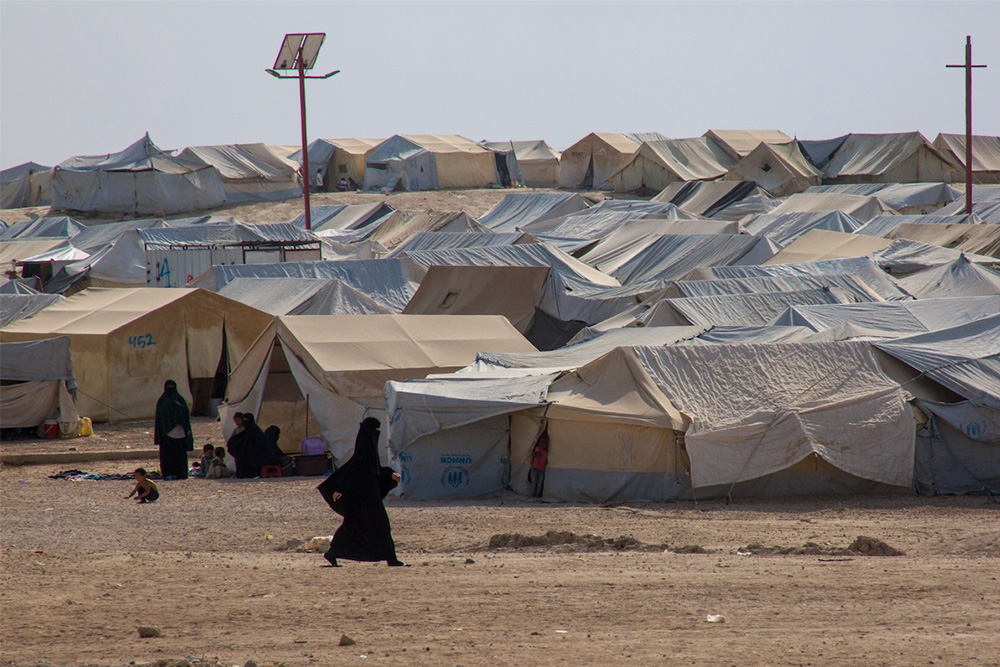
‘Life After Hope’: Integration Experiences of Families Returning from Al-Hol to Iraq
Thousands of families of individuals associated with ISIS militants have lived in Al-Hol camp, northeast Syria for many years. Iraq’s repatriation effort represents something unprecedented globally: both in scale, with an estimated 20,000 mostly women and children returned since 2021, and in the extended duration these individuals spent in northeast Syria’s camp system. Iraqi officials consistently state their commitment to returning all remaining Iraqi nationals from Syria within the coming months.
But this is no ordinary repatriation. The reality confronting Iraq challenges fundamental assumptions about what ‘return’ means when significant numbers of returnees are children and young mothers with no living memory of life outside camps.
Upon return, families stay at Iraq’s Amal (‘Hope’) Centre for Rehabilitation (formerly Al-Jadaa) in Nineveh, officially for three to six months, though some remain longer. However, there are cases of individuals who managed to escape from Al-Hol and return to Iraq through irregular channels, bypassing rehabilitation programmes entirely.
Beyond the Gates of Hope
Current research, mainly produced by international organisations, focuses on what happens inside Amal. This study turns the lens outwards to examine the post-Amal phase: the period when families actually try to live in neighbourhoods, find work, rebuild relationships, enrol in school, and navigate both security procedures and social dynamics.
This ongoing research draws on fieldwork in Iraq, including interviews and focus group discussions with returnees from Al-Hol, local organisations supporting them, international actors, and national authorities.
Integration, Not Reintegration
The distinction between reintegration and integration sits at the heart of understanding Iraq’s challenge. Traditional reintegration assumes people are returning to a familiar context – rebuilding disrupted but remembered connections to places, people, and practices. Integration, by contrast, involves helping individuals adapt to an essentially new environment for the first time.
Years in Al-Hol camp plus months in Amal mean many young adults, young mothers and children have no living memory of everyday Iraqi life. As one female returnee from Mosul said: ‘When we first left Al-Jadaa and arrived in Mosul, our children were surprised: oh, these are cars, these are houses. They have never seen them before’.
Challenges and barriers to successful integration are numerous; some of the key ones are outlined below.
The Documentation Issue
Returnees identify civil documentation as a major practical bottleneck to integration. Lacking or ‘flagged’ documents identifying them as associated with ISIS, trigger humiliation at service counters and time-consuming secondary checks at checkpoints: ‘It takes us an hour to pass… When we arrive at the checkpoint, my heart pressure is beating fast.’ Without rapid policy-level fixes to documentation, psychosocial gains upon their return to Iraq erode in daily life.
Living in the Shadows
Returnees described persistent fear and routine avoidance of disclosure: ‘We don’t tell people we came back from the camp… six months that I haven’t seen anyone from the neighbourhood.’ ‘From the beginning, they did not allow us to rent. They said you are Daesh.’ Integration stalls when the only socially ‘safe’ strategy is silence and isolation, creating a cycle where social distance feeds suspicion, making community acceptance even harder to achieve.
Economic Precarity
The challenge extends beyond social acceptance to basic economic survival. Most returnees have lost their homes, sources of income, and any financial foundation they once had. For women, who comprise the majority of adult returnees, the situation is dire. As a local NGO representative starkly described: ‘some women came to us and said there is no job for them. They are forced to do unethical work.’ This reality underscores how economic marginalisation can push already vulnerable returnees towards dangerous coping mechanisms.
Communities Unprepared, Authorities Untrained
The integration challenge is compounded by a critical gap in community and institutional readiness. Local authorities and communities receiving returnees are often unprepared for the scale and complexity of the task they face. Without specialised training and adequate resources, even well-intentioned local institutions struggle to balance security concerns with integration needs.
When Help Ends Abruptly
Local authorities described a standard stay of three to six months at Amal, followed by an abrupt transition: ‘When the families are out, the support stops as well.’ Returnees receive limited to no governmental support upon exiting Amal. The primary assistance comes from local and international organisations, but this support network is increasingly constrained by shrinking resources and funding limitations.
Many families cluster in underserved areas where isolation deepens. This cliff-edge approach leaves families without bridge programming: practical accompaniment during the fragile handover from centre to community. Local authorities report concerning behavioural carry-overs in some boys (‘don’t watch TV,’ ‘wear niqab’), while emphasising that mutual fear – families fearing society, communities fearing returnees – dominates the atmosphere.
Relocation, Not Return
Many families do not return to their areas of origin after leaving Amal because of crimes committed by their relatives against the local community during ISIS rule. Some face rejection from extended family and neighbours, while others choose to relocate to unfamiliar districts or governorates to avoid recognition. For many, this amounts less to reintegration than to unsupported relocation.
Voices of Change
Despite persistent challenges, some returnees express growing confidence: ‘The first time, we were afraid of society. Now we have confidence to say we are not guilty.’ Yet risks remain. As one community police officer reported hearing from a returnee: ‘I yearn for those old days. I miss bullets.’
The Long Road to Belonging: Recommendations
This globally unique case – in scale, duration, and complexity – demands approaches that recognise integration as a different challenge from reintegration. The post-Amal phase is where belonging is either built or broken. The current approach, which ends governmental support at Amal’s exit, requires urgent reform.
As part of this research project, the potential fears and negative implications of unaddressed challenges will be examined, and separate, specific policy recommendations will be developed and disseminated to local, national, and international stakeholders. For now, key policy recommendations include:
- The Iraqi federal government should step in and recognise that this is not a temporary problem, but one requiring significant national and local government support to integrate thousands of returnees. This includes substantial financial investment in livelihood programmes, skills training, and economic opportunities.
- International partners to Iraq should fund local NGOs, as for many returnees their only main interaction and support come from projects implemented by local NGOs.
- Communities and local government institutions must be mobilised, trained, and equipped to handle returnee integration.
This blog was originally published by the LSE Middle East Centre on 7 October 2025.
Kamaran Palani leads the PeaceRep Iraq research team with the LSE Middle East Centre. As part of this project, he also conducts research on the underlying drivers of conflict and state fragmentation in Iraq.